Reviewed · SAN FRANCISCO CHINATOWN TOURS
San Francisco: North Beach & Chinatown Food History Tour
Food and history share the same sidewalk.
This San Francisco North Beach & Chinatown Food History Tour mixes restaurant-style sampling with neighborhood storytelling, from the Gold Rush to the jazz age. I love the small-group pace (up to 10) and the way the guide connects each bite to what used to happen in these streets. One thing to consider: it’s still a few hours of walking, so comfortable shoes matter.
The tour’s food stops are the payoff, but the facts are the secret ingredient. You’ll learn how areas like the old Barbary Coast fit into the city’s growth, while you snack on items like Ghirardelli chocolate and fresh fortune cookies. The only drawback I’d flag is that with so many tastings, you’ll want to plan a light meal before you go.
In This Review
- Key points before you start
- Start Under the Transamerica Pyramid: where the tour begins and why it works
- Transamerica Redwood Park: the shortest walk that feels like a reset
- Barbary Coast to jazz-age snacks: old red-light district, modern candy stops
- North Beach (Little Italy) and the Gold Rush: the stories behind the pizza-and-pastry moment
- Chinatown street life and dim sum: where the walking gets lively
- The Golden Gate Fortune Cookie Factory: fresh cookie, real history
- Food value: 15+ tastings, water, and why the $99 price makes sense
- Guide factor: why Stuart’s storytelling gets repeated in reviews
- Group size and pacing: small group means you actually get attention
- Who should book this tour (and who might not love it)
- Should you book the San Francisco North Beach & Chinatown Food History Tour?
- FAQ
- How long is the North Beach & Chinatown Food History Tour?
- Where do I meet the guide?
- How much does it cost?
- What’s included in the ticket price?
- How many foods will I try?
- Is the tour wheelchair accessible?
- How big is the group?
- Is the tour in English?
- Do I need to buy entry tickets separately?
- What is the cancellation policy?
Key points before you start
- Transamerica Redwood Park: a rare, tucked-in redwood moment near the skyline.
- Barbary Coast stories: jazz-age context paired with classic sweet snacks.
- North Beach Gold Rush mix: Little Italy energy with Wild West history.
- 15+ food tastings: you won’t just sample one thing and leave.
- Chinatown street food and dim sum: plus a stop at the Golden Gate Fortune Cookie Factory.
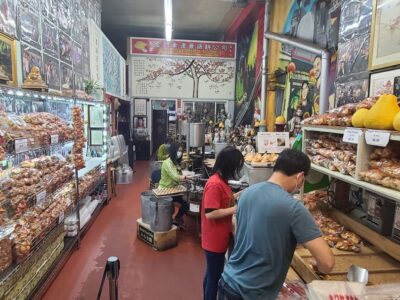
More lanterns, tea and dumplings in Chinatown

Start Under the Transamerica Pyramid: where the tour begins and why it works
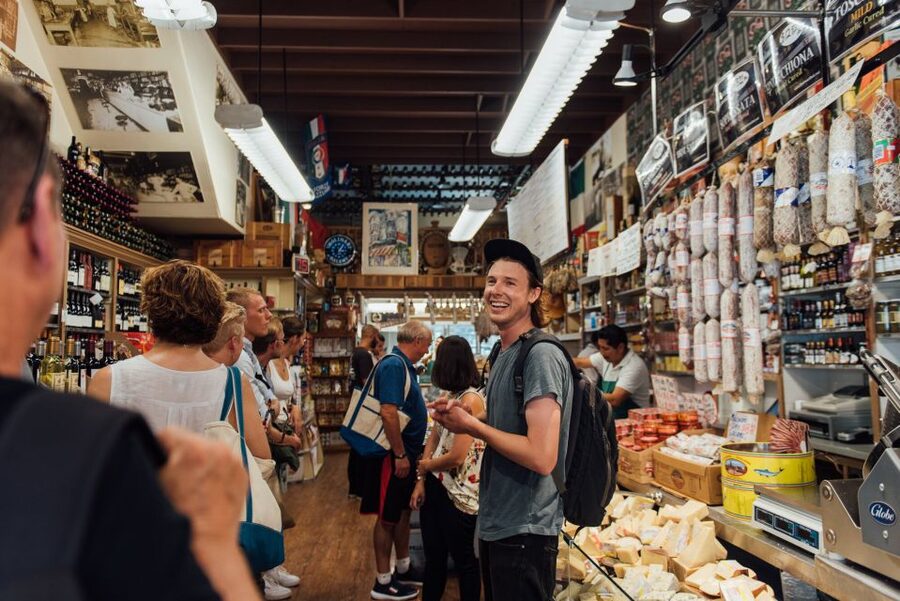
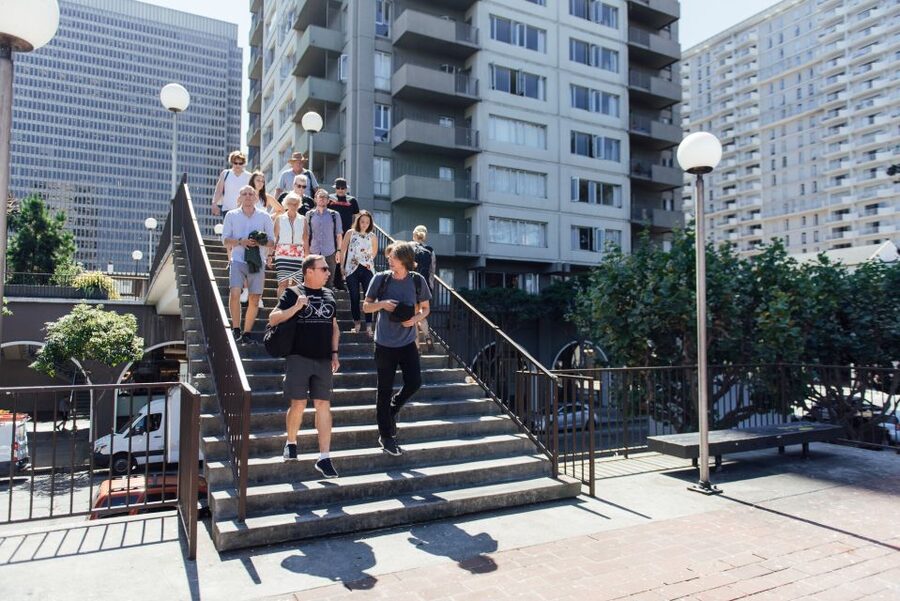
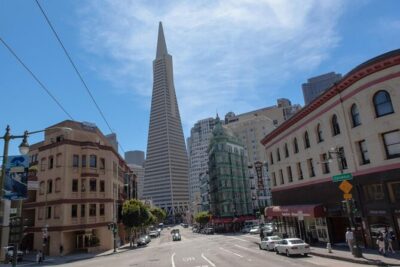
The meeting point is easy to find once you know what to look for: Mark Twain Alley, behind the Transamerica Redwood Park, off Sansome Street between Clay and Washington Street. Your guide will be waiting near the park entrance, so you’re not searching around for long.
The start is smart because it frames the whole walk. You begin in the Financial District under the Transamerica Pyramid and get a quick sense of how this part of San Francisco grew into what it is today. The pyramid is the second-tallest building in the city, and that trivia is more than a flex; it helps you understand why the area became a power center.
From there, you’re already in “neighborhood mode,” not “museum mode.” This tour uses food tastings to keep you moving, but the history keeps it from feeling random.
Transamerica Redwood Park: the shortest walk that feels like a reset
One of my favorite parts of this kind of city tour is the built-in breathing room. Here, you get exactly that at Transamerica Redwood Park, San Francisco’s smallest redwood park, with only a handful of redwood trees.
You’re not leaving the city to see nature. You’re seeing how a city like San Francisco can make room for something old right in the middle of modern construction. It’s a small stop, but it changes your eyes as you walk—suddenly you notice street scale, building corners, and where people actually gather.
And because the tour stays on foot, that park pause matters. It helps you settle in before you head toward the louder, more chaotic neighborhoods that come next.
Barbary Coast to jazz-age snacks: old red-light district, modern candy stops
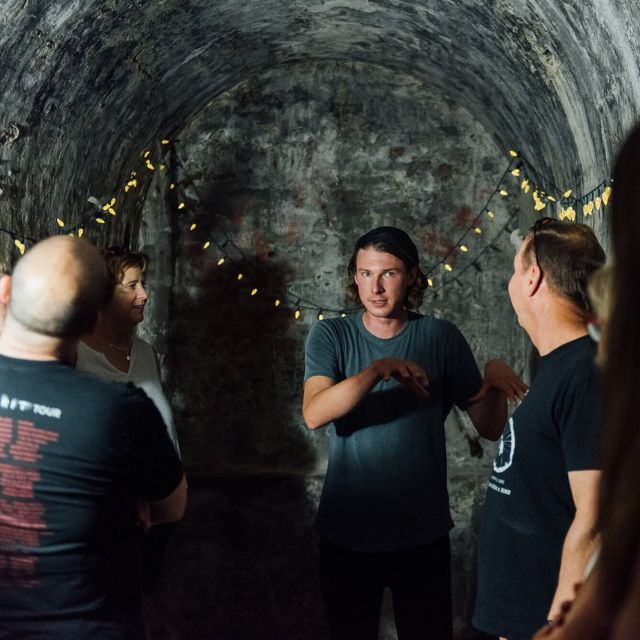
Next comes the walk to the Barbary Coast, once the red-light district in the 19th and early 20th centuries. This is the section where the tour does something useful: it gives you the “why” behind the city’s reputation for reinvention.
Your guide explains how the area featured dance halls, concert saloons, and brothels. If you’ve ever wondered how a city gets its legend, this is the answer in plain language: people, money, entertainment, and opportunity clustered in one place—and then the city changed again.
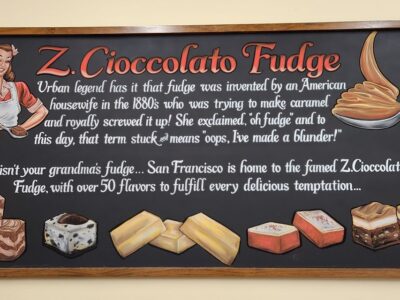
Then you hit the food. The Barbary Coast stop leans classic and sweet, with Ghirardelli chocolate, saltwater taffy, homemade fudge, and caramel popcorn. It’s not random candy shopping. The treats are an easy way to compare time periods: you’re tasting “snack culture” while your guide places it against jazz-age San Francisco.
Possible drawback: this is one of the sweetest stretches of the route. If you’re not a big candy person, you’ll still be able to enjoy it, but I’d plan on taking your time and sipping water between bites.
North Beach (Little Italy) and the Gold Rush: the stories behind the pizza-and-pastry moment
After the Barbary Coast, you roll into North Beach, also known as Little Italy. This is where the tour’s history shifts gears from entertainment districts to the city’s Wild West roots.
You’ll learn facts and anecdotes about the Gold Rush of 1849 and how that period shaped the kinds of people and businesses that appeared in San Francisco. The key is that it’s not only dates and names. Your guide ties the story to what you can still feel in the streets today: old-school eating, tight neighborhood identity, and the constant flow of newcomers.
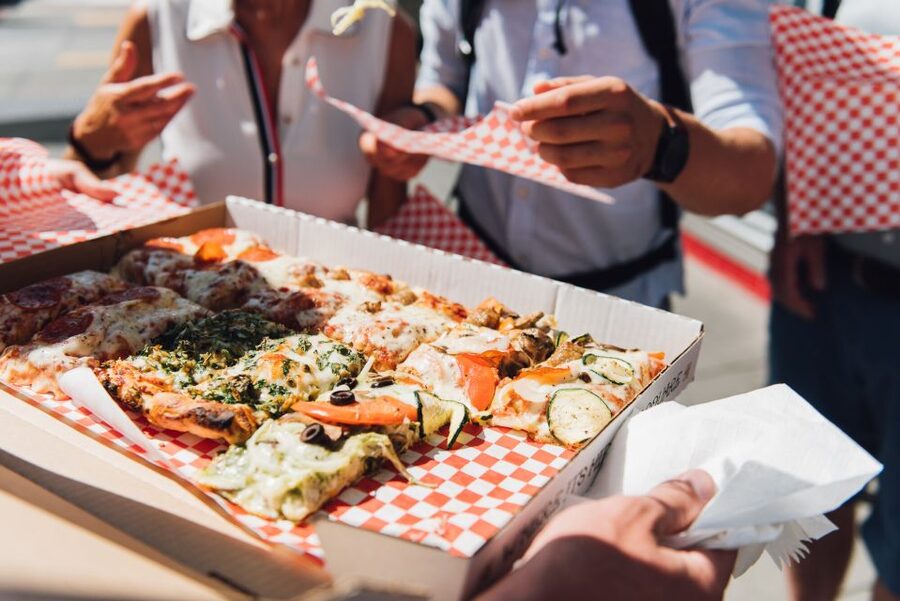
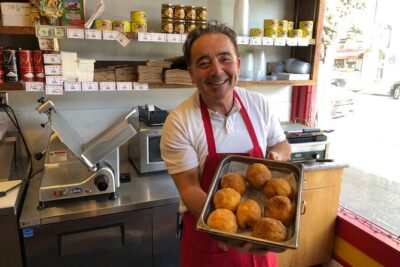
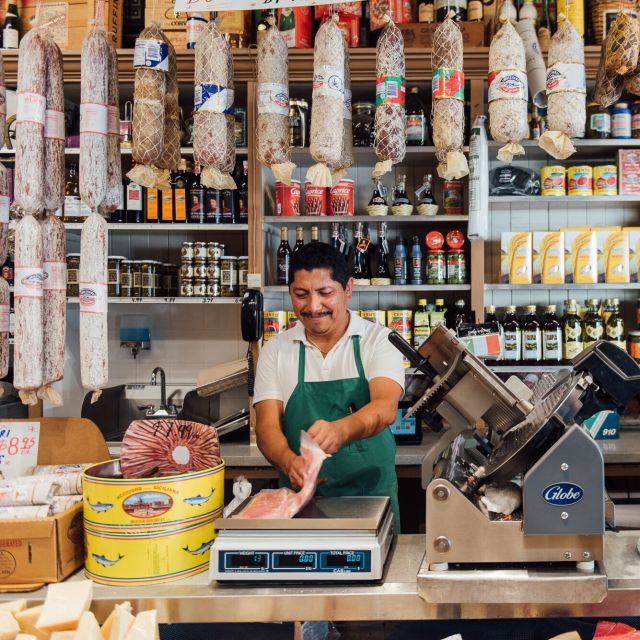
Then the food ramps up in a way that feels like a best-of sampler. Expect tastings that can include Italian pastries, pizza, sandwiches, cakes, antipasto, and aged cheese. There’s also a social layer here. You’re not just eating at counters; you’re chatting with local small business owners while learning what each district means.
One detail that stood out in feedback for this tour: the guide’s local connections. The tour is led by Stuart, a San Francisco native, and multiple comments highlight that he knows people personally in the Italian and Chinese neighborhoods. That kind of access is why the experience feels more like conversation than scripted sightseeing.
If you’re a foodie who also cares about context, this is the best match. If you only care about food and don’t want any history at all, you might feel the tour is more “story with snacks” than “snack-only tour.”
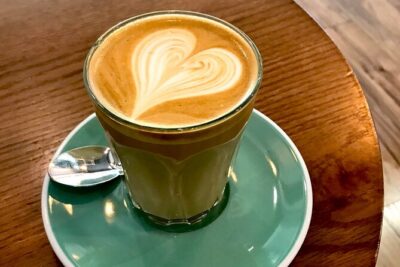
Espresso and pasta, more of North Beach
Chinatown street life and dim sum: where the walking gets lively
At this point, the route turns into something you can feel right away. Chinatown is known for an eclectic mix of shops and street food vendors, and your guide leans into that energy as you wander.
The tasting here includes dim sum, served steaming—exactly the kind of food that makes you pause walking and pay attention. If you’re hoping to understand Chinatown beyond souvenirs, this is the practical approach: you get street-level food and guided context so you’re not guessing what you’re looking at.
You’ll also have time around souvenir shops. That’s good because you can compare what you want to buy with what you’ve learned. A fortune cookie isn’t just a fun take-home. On this tour, it’s part of a real food-making story.
And you’ll finish this neighborhood section with an attraction stop tied to the food you ate.
The Golden Gate Fortune Cookie Factory: fresh cookie, real history
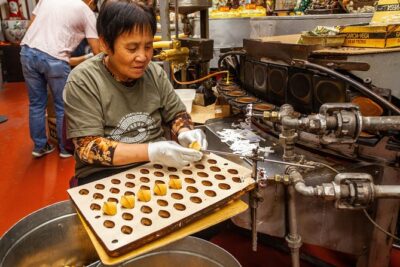
The Golden Gate Fortune Cookie Factory stop is a satisfying closer because it explains something everyone thinks they already understands. Fortune cookies are familiar, but most people don’t know how the story of the factory fits into the broader Chinatown experience.
You’ll learn about the factory’s history, and you get to try a fresh cookie. That final bite matters because it’s interactive. It gives you a souvenir that feels connected to what you just did rather than something you picked up at random.
If you’re someone who likes to bring home edible proof that the trip was real, this is a strong finish. Just plan to carry your cookie and any other take-home bites comfortably.
Food value: 15+ tastings, water, and why the $99 price makes sense
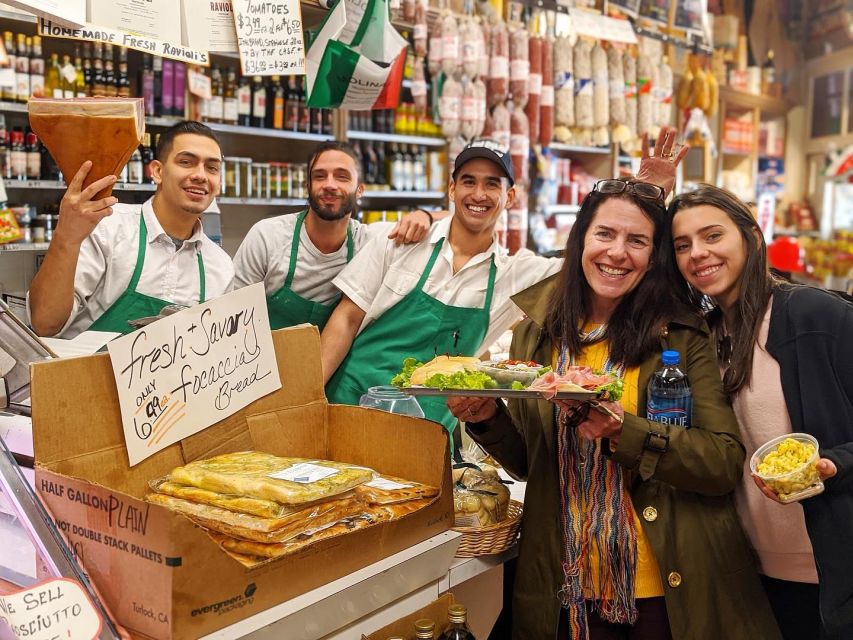
The price is $99 per person, and the only fair way to judge it is by what you actually receive: a guide, water, a map, entry tickets, and food tastings that add up to 15+ different foods.
That’s the core value argument. You’re not paying for one meal at full price. You’re paying for a planned sequence of snacks across multiple neighborhoods, with history attached so you’re not stuck with “I ate stuff and forgot it.”
Also, the tour includes skip-the-line entry via a separate entrance. That saves time at the places that would otherwise slow you down, and in a 270-minute tour, time is everything.
One small practical note: because tastings are continuous, you may end up eating more than you planned. That’s great if you love variety, but it means you should go in with room in your stomach and a willingness to slow down when something looks good.
Guide factor: why Stuart’s storytelling gets repeated in reviews
What makes this tour feel memorable is the guide. Stuart is repeatedly praised for growing up in San Francisco and bringing a mix of city knowledge and everyday-life detail.
Several comments emphasize his enthusiasm and kindness, and they also highlight how personal his local connections feel. That doesn’t just make the history sound better; it changes what you notice. When a guide knows people in the neighborhoods, you’re more likely to hear small truths instead of generic talking points.
You’ll also benefit from a guide who gives recommendations beyond the tour. Feedback points to the fact that this tour helps you build a shortlist of food, music, and sightseeing ideas for the rest of your trip.
If you’re booking early in your visit, that’s a real advantage. You’ll leave with a better read on where to go next.
Group size and pacing: small group means you actually get attention
This is a small group tour limited to 10 participants, and that matters more than people think. With fewer people, the guide can adjust when you’re moving slowly through crowds, ask if you have questions, and keep the history from feeling like a lecture.
The total duration is 270 minutes (about 4.5 hours). That’s long enough to cover multiple districts—Financial District, Barbary Coast, North Beach, and Chinatown—but short enough that you’re not stuck doing a full-day crawl.
Wheelchair accessibility is listed, and water is included. Combine that with comfortable shoes, and you’re set for a tour that feels active without being punishing.
Who should book this tour (and who might not love it)
This works best if you want two things at the same time: food variety and neighborhood context.
You’ll probably love it if:
- You like tastings across different cuisines, not just one restaurant.
- You want history that connects to streets you can still walk today.
- You enjoy guided conversation with small business owners.
You might want to think twice if:
- You hate walking for hours, even at an easy pace.
- You prefer your tours purely visual or purely historical, with no food component.
- You don’t do well with lots of sweets and snacks in one sitting.
A final “smart booking” tip: do this earlier rather than later. When the guide gives you a feel for the city, you can steer your remaining days toward better meals and better neighborhoods.
Should you book the San Francisco North Beach & Chinatown Food History Tour?
Book it if you want a guided walk that treats eating as the main storyline. The best argument here is value: 15+ tastings, water, map, and entry included, all wrapped in a route that covers the city’s storytelling from the Gold Rush era to the jazz age and into Chinatown street life.
Skip it only if you know you’ll be unhappy with a food-forward pace or if you’re not interested in any history at all. The tour’s design is clear: you’re here to snack and learn in the same motion.
If that sounds like your style, this is the kind of SF experience that tends to stick, because you leave with both full hands and a clearer picture of the city.
FAQ
How long is the North Beach & Chinatown Food History Tour?
The tour lasts 270 minutes (about 4.5 hours).
Where do I meet the guide?
Meet at Mark Twain Alley, located behind the Transamerica Redwood Park, off Sansome Street between Clay and Washington Street.
How much does it cost?
The price is $99 per person.
What’s included in the ticket price?
Your ticket includes a guide, water, a map, entry tickets, and food tastings.
How many foods will I try?
You’ll sample 15+ different foods, including items such as pastries, sandwiches, sweets, and dim sum.
Is the tour wheelchair accessible?
Yes, the tour is listed as wheelchair accessible.
How big is the group?
It’s a small group limited to 10 participants.
Is the tour in English?
Yes, the live guide is English.
Do I need to buy entry tickets separately?
No. Entry tickets are included, and you’ll also get skip-the-line entry via a separate entrance.
What is the cancellation policy?
You can cancel up to 24 hours in advance for a full refund.
Eat San Francisco: More Food Walks
- San Francisco Authentic Food Tour with 5 Locals Favorites Dishes★ 5.0 · 852 reviews
- San Francisco: Chinatown Culinary Walking Tour★ 4.8 · 265 reviews
- San Francisco: North Beach and Little Italy Food Tour★ 4.8 · 188 reviews
- Mission District Food Tour: Appetizers, Entrée and Dessert★ 5.0 · 182 reviews
- Exclusive North Beach Food Tour in San Francisco★ 5.0 · 162 reviews
- SF’s Chinatown: Tea & Dim Sum Food Tour – Includes full meal, 3hr★ 5.0 · 153 reviews
North Beach and Little Italy
- North Beach & Little Italy Walking Tour: Food, History & Flavor★ 5.0 · 1,044 reviews
- San Francisco: North Beach and Little Italy Food Tour★ 4.8 · 188 reviews
- Exclusive North Beach Food Tour in San Francisco★ 5.0 · 162 reviews
- San Francisco: Food Walking Tour of Chinatown & North Beach★ 4.8 · 148 reviews
- San Francisco North Beach & Chinatown Food Tour with 5 Tastings★ 5.0 · 137 reviews
- North Beach Food Tasting and Cultural Walking Tour★ 5.0 · 66 reviews
More Hours in Chinatown
- Chinatown & North BeachLittle Italy: 7 Tastings & History★ 5.0 · 1,070 reviews
- Ghost Hunt in SF Chinatown with a Professional Investigator★ 5.0 · 922 reviews
- San Francisco Chinatown Walking Tour★ 5.0 · 778 reviews
- Chinatown Walking Tour: Food, History & Flavor★ 5.0 · 575 reviews
- San Francisco: Chinatown Culinary Walking Tour★ 4.8 · 265 reviews
- SF’s Chinatown: Tea & Dim Sum Food Tour – Includes full meal, 3hr★ 5.0 · 153 reviews
Just Reviewed: Fresh San Francisco Tours
- Private San Francisco City Tour + Alcatraz (Tickets Incl., Max 6)
★ 5.0 · 3 reviews - San Francisco: North Beach Food and History Walking Tour
★ 5.0 · 3 reviews - San Francisco Bay Cruise and City Combo Tour
★ 3.5 · 3 reviews - San Francisco City Half-Day Private Custom Tour
★ 5.0 · 3 reviews - San Francisco: Muir Woods, Point Reyes, and Meadery Tour
★ 4.2 · 3 reviews - Private Muir Woods and Sausalito Half Day Tour
★ 5.0 · 3 reviews
San Francisco Chinatown Tours, compared.
 ★ 5.0Chinatown & North BeachLittle Italy: 7 Tastings & HistoryFrom $961,070 reviews
 ★ 5.0Ghost Hunt in SF Chinatown with a Professional InvestigatorFrom $55922 reviews
 ★ 5.0San Francisco Chinatown Walking TourFrom $59778 reviews
 ★ 5.0Chinatown Walking Tour: Food, History & FlavorFrom $86575 reviews
 ★ 4.8Chinatown Culinary Walking TourFrom $84265 reviews
 ★ 5.0SF’s Chinatown: Tea & Dim Sum Food Tour – Includes full meal, 3hrFrom $99153 reviews
 ★ 4.8Food Walking Tour of Chinatown & North BeachFrom $94148 reviews
 ★ 5.0San Francisco Chinatown Food TourFrom $99138 reviews
Browse the lists this tour appears in