
Reviewed · HISTORICAL TOURS
Food, History, and Resistance: A Self-Guided Audio Tour
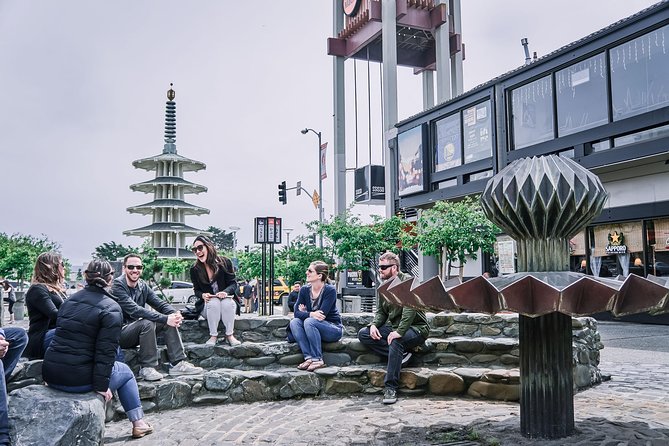
San Francisco has stories you can walk through. This self-guided audio tour turns Japantown street corners into a history of resistance told through food, music, and community memory.
I especially love how it spotlights real, specific places, like Benkyodo, one of only three traditional Japanese manju makers still operating in the US. I also like the VoiceMap setup, because you get offline access to audio, maps, and geodata, so you can move through the neighborhood without constantly chasing signal.
One drawback to consider: you’ll need your own smartphone. It’s not included, so come with it charged and ready.
In This Review
- Key highlights worth your hour
- Japantown’s story is bigger than food
- Price and timing: $11.99 for a practical, story-filled walk
- Where it starts and ends (and how that affects your plan)
- How to use VoiceMap without getting stuck
- Stop 1: Japantown beyond ramen and sushi
- The internment memory you’ll hear about near the Japanese Language School
- Benkyodo and the last-manju craft at this scale
- Bop City on Fillmore: jazz after-hours and the Harlem of the West
- Pacing, pause time, and why self-guided works here
- Who should book this tour (and who might not)
- Should you book Food, History, and Resistance in Japantown?
- FAQ
- How long is the Food, History, and Resistance in Japantown audio tour?
- Is the tour offered in English?
- Where do I start the tour?
- Where does the tour end?
- What’s included in the $11.99 per person price?
- Do I need a smartphone to use the tour?
- Does the tour include food, drinks, or museum tickets?
- Can I use the tour offline?
- Is there a group size limit?
- What is the cancellation policy?
Key highlights worth your hour
- Benkyodo’s manju legacy: one of only three traditional manju makers left in the US
- Japantown beyond ramen and sushi: the tour focuses on stories many visitors miss
- Bop City on Fillmore Street: a landmark after-hours jazz spot connected to big names
- WWII internment context in the neighborhood: the tour includes internment-reporting memory tied to a gate near the Japanese Language School
- Designed for an easy pace: the audio timing leaves room to pause and look longer when something pulls you in
Other tables and pours worth the walk
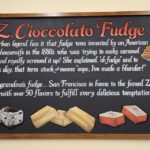
Japantown’s story is bigger than food
This tour works because it refuses to treat food like a side dish. You’ll start in Japantown with a reminder that the neighborhood is more than what ends up on menus. The narration frames everyday sweets and storefronts as entry points to larger themes: belonging, exclusion, and how communities keep culture alive.
What I like about this format is the balance. You get moments of warmth and craft—like the focused, hands-on tradition behind manju—then the story widens to music and resistance. Even if you only know Japantown for dinner, you’ll come away with a different mental map.
And since it’s self-guided, you’re not stuck marching at someone else’s speed. The experience is built to fit into an afternoon and still feel thoughtful.
Price and timing: $11.99 for a practical, story-filled walk
At $11.99 per person for roughly 50 minutes to 1 hour, you’re paying for an audio route and lifelong access to it. You’re not paying for a meal, a bus, or an entry ticket. That’s important for value: this is a walk-and-listen experience, not a package with attractions built in.
Here’s the trade-off in plain terms. If you want food or museum stops included, this won’t cover that. But if you enjoy history that you can experience on the sidewalk, this price is hard to beat. Lifetime access also helps. You can reuse it when you return to San Francisco or when you want to show the route to a friend.
There’s also a small group limit (maximum 10 travelers). Even though you’re using an app, that cap is a good sign that the operator isn’t treating this like a mass-market production line.
Where it starts and ends (and how that affects your plan)
The tour begins at Osakaya Restaurant, 1737 Post St, San Francisco, CA 94115. It ends at 1010 Geary Blvd, San Francisco, CA 94109. That matters because you’ll want to plan what you do next after you finish.
If you like to keep things simple, treat the route like a loop with an ending you can hop off from. Since the experience runs from midday to late-night hours listed as 12:00 AM to 11:59 PM, you can choose a time that matches your energy. You’ll likely find it easiest to start when you can still enjoy some wandering afterward, especially if you plan to grab snacks before or after.
One more practical note: it’s near public transportation, which helps if you don’t want to commit to a long walk across town.
How to use VoiceMap without getting stuck
This is delivered through the VoiceMap application. You get lifetime access to the specific tour, plus offline access to audio, maps, and geodata. That’s a big deal in neighborhoods where cell coverage can be uneven.
Before you head out, think like this:
- Download or prepare your audio and maps while you still have a reliable connection.
- Bring earbuds or headphones so you can focus.
- Keep an eye on your phone battery, since you’ll use it for the whole route.
Also, you’re responsible for your device. A smartphone isn’t included, so don’t show up with a half-charged battery and hope for the best.
Set these beside your pick before booking:
Stop 1: Japantown beyond ramen and sushi
The opening stop sets expectations in a good way. It acknowledges something most visitors miss: yes, Japantown is a place for standout Japanese food, but it’s also a community with stories you wouldn’t know unless you were part of it.
You’ll be guided to look at the neighborhood as a living archive. Instead of treating streets as scenery, the narration encourages you to pay attention to what’s still here and what has changed. That’s an important mindset shift. Once you start seeing the built environment as memory, the rest of the route lands harder.
The pacing here tends to feel practical. One of the best aspects of self-guided audio is the chance to pause. The narration gives you times when you can stop, look around, and take a second before moving on.
The internment memory you’ll hear about near the Japanese Language School
A major thread in the tour is WWII-era history and how Japanese communities in San Francisco were impacted. One story included in the route focuses on a gate next to the Japanese Language School area, tied to how people reported for internment.
That detail matters because it turns an abstract history lesson into something physical. You’re not just reading about events from far away. You’re standing in a place that connects to how family lives were interrupted.
One reviewer shared a personal family timeline: grandparents and a father who were interned after reporting, first at Tanforan horse track and then at Topaz, Utah. That kind of testimony is exactly what this tour style is designed for. Sites that still exist can feel almost unreal next to everyday sidewalk life, and that emotional contrast is part of the point.
If you’re the type who prefers lighter walking routes, this section may hit harder than you expect. But if you want history that doesn’t float above the street, it’s powerful.
Benkyodo and the last-manju craft at this scale
Benkyodo is the kind of stop that makes the whole tour worth it. It’s one of only three traditional Japanese manju makers remaining in the US. The other two are in the remaining Japantowns in Los Angeles and San Jose.
That scarcity gives the story weight. You’re not just learning about a dessert. You’re learning about a craft tradition that’s survived displacement, generational change, and shifting neighborhoods.
Manju itself is described in plain, tasty terms: sweet bean paste inside, wrapped with mochi made from pounded glutinous rice into a sticky, gooey mass. Even if you’ve never seen the process, that explanation helps you understand why this isn’t just a snack. It’s a technique, and technique is cultural memory you can taste.
What I like about this stop is the specificity. Traditional food stories can get vague fast, but here you get a real place, a real maker, and a reason it matters now.
Possible drawback: if you’re arriving hungry, you might want to plan for a snack after. The tour itself doesn’t include food or drinks, so you won’t automatically get a manju as part of the experience.
Bop City on Fillmore: jazz after-hours and the Harlem of the West
Next comes one of the route’s most exciting pivots: music. Bop City at 1712 Fillmore Street becomes a window into the after-hours scene that pulled jazz talent from the mainstream into local legend.
The story connects Bop City with major names: John Coltrane, Billie Holiday, Miles Davis, and Duke Ellington. It also places the spot in context with the 1940s surge of San Francisco’s Black community. Fillmore Street earned the nickname Harlem of the West, and the tour uses that to show how cultural hubs don’t appear by accident.
This stop is a reminder that resistance doesn’t always wear the same clothes. Sometimes it sounds like music that refuses to be ignored. Sometimes it’s a community creating a space to play, gather, and be seen.
If you’re a jazz fan, you’ll appreciate the way the tour ties big names to an address you can stand in front of. If jazz is new to you, you’ll still get value because you learn the neighborhood context rather than just a list of artists.
Pacing, pause time, and why self-guided works here
The tour’s runtime—50 minutes to 1 hour—hits a sweet spot. Long enough to tell a coherent story, short enough that you won’t feel trapped if something else catches your eye.
The audio timing also seems designed for real life. You’re not constantly rushing to the next waypoint. You’ll have moments to stop, look, and explore details around the sites. That’s especially helpful in Japantown, where it’s easy to get distracted by signs, storefronts, and side streets.
Because it’s not bundled with food or entry tickets, the walking time stays honest. You get history without turning your afternoon into a checklist.
Who should book this tour (and who might not)
This fits best if you:
- Enjoy self-guided walking tours where the streets matter
- Want Japantown history that goes beyond food-focused tourism
- Like short experiences that still feel meaningful
- Are curious about how WWII-era memory and cultural craft live in one neighborhood
You might want to skip it (or pair it with something else) if you:
- Prefer guided tours with live human explanations
- Want food included as part of the price
- Need a fully ticketed attraction day (this route has no museum tickets or entrances)
Also, this experience is in English and is described as suitable for most travelers. You’ll still want to be comfortable walking, since it’s a street-based audio route from one address to another.
Should you book Food, History, and Resistance in Japantown?
I’d book it if you want a focused hour that changes how you see the neighborhood. For $11.99 with lifetime access and offline VoiceMap audio, it’s strong value, especially if you care about context—food craft, community memory, and the cultural spaces where people gathered to resist being erased.
The biggest decision point is your mood. If you want light sightseeing only, this tour includes WWII-era internment storylines and may feel emotionally intense. If you want real place-based history, it delivers.
If you do book, come with one expectation: you’re going to walk, listen, and look a little harder than usual. That’s where the best moments happen.
FAQ
How long is the Food, History, and Resistance in Japantown audio tour?
It takes about 50 minutes to 1 hour.
Is the tour offered in English?
Yes, it’s offered in English.
Where do I start the tour?
You start at Osakaya Restaurant, 1737 Post St, San Francisco, CA 94115.
Where does the tour end?
The tour ends at 1010 Geary Blvd, San Francisco, CA 94109.
What’s included in the $11.99 per person price?
You get lifetime access to the Food, History and Resistance in Japantown tour, plus access to the VoiceMap application and offline access to audio, maps, and geodata.
Do I need a smartphone to use the tour?
Yes. A smartphone is not included.
Does the tour include food, drinks, or museum tickets?
No. Food, drinks, and tickets or entrance fees to attractions are not included.
Can I use the tour offline?
Yes. Offline access to audio, maps, and geodata is included through the VoiceMap application.
Is there a group size limit?
Yes. The tour/activity has a maximum of 10 travelers.
What is the cancellation policy?
It is non-refundable and cannot be changed for any reason. If you cancel or ask for an amendment, the amount paid will not be refunded.
Forkfuls of San Francisco, Block by Block
- North Beach & Little Italy Walking Tour: Food, History & Flavor★ 5.0 · 1,044 reviews
- San Francisco Authentic Food Tour with 5 Locals Favorites Dishes★ 5.0 · 852 reviews
- Chinatown Walking Tour: Food, History & Flavor★ 5.0 · 575 reviews
- San Francisco: North Beach and Little Italy Food Tour★ 4.8 · 188 reviews
- Ultimate Electric SF Bike Tour- food, icons & local hidden gems★ 5.0 · 182 reviews
- Mission District Food Tour: Appetizers, Entrée and Dessert★ 5.0 · 182 reviews
More Tours in San Francisco
- Big Bus SF: Hop-on Hop-off Tour with 17 Stops and Sunset Option★ 4.0 · 4,539 reviews
- Napa and Sonoma Wine Country Full-Day Tour from San Francisco★ 4.5 · 4,455 reviews
- San Francisco: Hop-On Hop-Off Sightseeing Tour with 17 Stops★ 4.5 · 3,600 reviews
- Yosemite Highlights & Giant Sequoias Day Tour from San Francisco★ 4.5 · 3,455 reviews
- San Francisco Love Tour★ 5.0 · 2,830 reviews
- San Francisco: Alcatraz Island & 48-Hour Hop-On Hop-Off Tour★ 4.6 · 2,245 reviews
More Tour Reviews in San Francisco
- Muir Woods and Sausalito (Return by Bus or Ferry)★ 4.5 · 5,098 reviews
- Big Bus SF: Hop-on Hop-off Tour with 17 Stops and Sunset Option★ 4.0 · 4,539 reviews
- Napa and Sonoma Wine Country Full-Day Tour from San Francisco★ 4.5 · 4,455 reviews
- Small Group Yosemite and Giant Sequoias Day Trip from San Francisco★ 5.0 · 3,671 reviews
- San Francisco: Golden Gate Bay Cruise★ 4.7 · 3,644 reviews
- San Francisco: Hop-On Hop-Off Sightseeing Tour with 17 Stops★ 4.5 · 3,600 reviews
Just Reviewed: Fresh San Francisco Tours
- Private San Francisco City Tour + Alcatraz (Tickets Incl., Max 6)
★ 5.0 · 3 reviews - San Francisco: North Beach Food and History Walking Tour
★ 5.0 · 3 reviews - San Francisco Bay Cruise and City Combo Tour
★ 3.5 · 3 reviews - San Francisco City Half-Day Private Custom Tour
★ 5.0 · 3 reviews - San Francisco: Muir Woods, Point Reyes, and Meadery Tour
★ 4.2 · 3 reviews - Private Muir Woods and Sausalito Half Day Tour
★ 5.0 · 3 reviews
Historical Tours, compared.
 ★ 5.0Chinatown & North BeachLittle Italy: 7 Tastings & HistoryFrom $961,070 reviews
 ★ 5.0North Beach & Little Italy Walking Tour: Food, History & FlavorFrom $861,044 reviews
 ★ 5.0Chinatown Walking Tour: Food, History & FlavorFrom $86575 reviews
 ★ 5.0#1 Sonoma Walking Food, Wine Tasting & History Tour (Public Tour)From $189457 reviews
 ★ 5.0San Francisco Whiskey Cocktail Class: Views and City HistoryFrom $69206 reviews
 ★ 4.5Chinatown Food & History Walking Tour – Small GroupFrom $8536 reviews
 ★ 4.9Chinatown Food and History Walking TourFrom $8527 reviews
 ★ 4.5North Beach Food & History Walking Tour – Small GroupFrom $8925 reviews
Browse the lists this tour appears in