
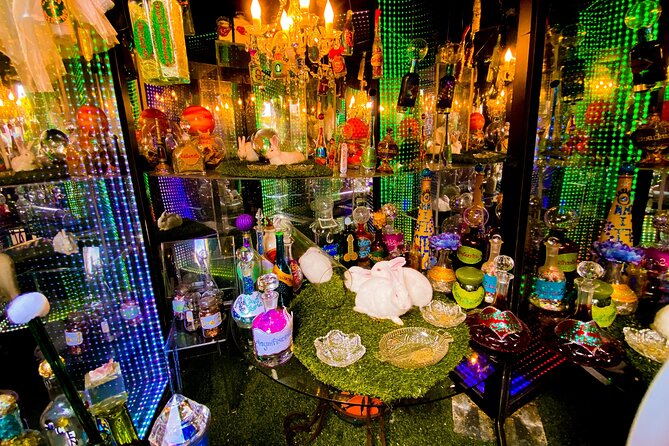
Reviewed · SAN FRANCISCO MUSEUMS & ATTRACTIONS
San Francisco Gregangelo Museum – Immersive Art Garden Tour
A garden tour with puzzles can still feel personal. That is the trick here: you’re guided through three enchanted outdoor gardens in San Francisco’s Saint Francis Wood, solving the Riddle of the Sphinx as the experience nudges you toward reflection. It’s playful on the surface, but the mood turns unexpectedly thoughtful as the riddles unfold.
What I like most is how small and private it feels. It’s just your group, and the guide’s job is to keep you moving through the story and the clues without turning it into a lecture.
My one caution: this isn’t a classic museum where you quietly stroll and look. If you strongly dislike games, sharing thoughts with your group, or anything that feels a bit inner-journey, you may find the format a tougher fit.
In This Review
- Key things to know before you go
- Why Saint Francis Wood is such a smart setting for a puzzle garden
- The 90 minutes: how the Riddle of the Sphinx experience actually moves
- The one-stop start: The Gregangelo Museum as your “gateway”
- Garden of Youth: relive your innocence without getting cheesy
- Garden of Life: sensuality as a clue to attention
- Garden of Wisdom: the unknown part that makes people slow down
- The role of your guide (Nick and Marcelo are real favorites)
- Price and value: is $127 per person worth it?
- Who this works for (and who might want a different San Francisco plan)
- What to do before you arrive (so you don’t feel behind)
- Quick practical details that matter on the day
- Should you book the Riddle of the Sphinx Garden Tour?
- FAQ
- Where does the tour start?
- How long is the Riddle of the Sphinx tour?
- How much does it cost?
- Is this a private tour?
- What is included with the ticket?
- Do I get a mobile ticket?
- What are the three gardens called?
- Is the tour in one place or multiple areas?
- Is it refundable if my plans change?
- Is it accessible and are service animals allowed?
Key things to know before you go
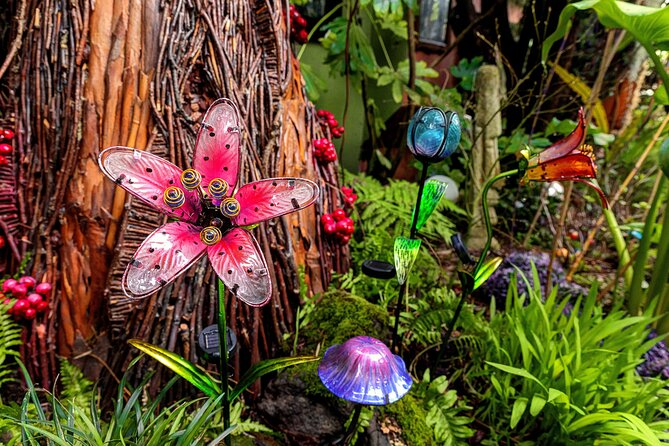
- Three themed gardens: Garden of Youth, Garden of Life, and Garden of Wisdom
- A guided riddle-game structure: you’ll solve clues as you move through each garden
- Private by default: only your group participates, with a facilitator leading the pace
- Digital storybook included: part of how the experience strings together
- A reflective tone: people come away feeling like they processed more than art
More galleries and halls out of the fog




Why Saint Francis Wood is such a smart setting for a puzzle garden
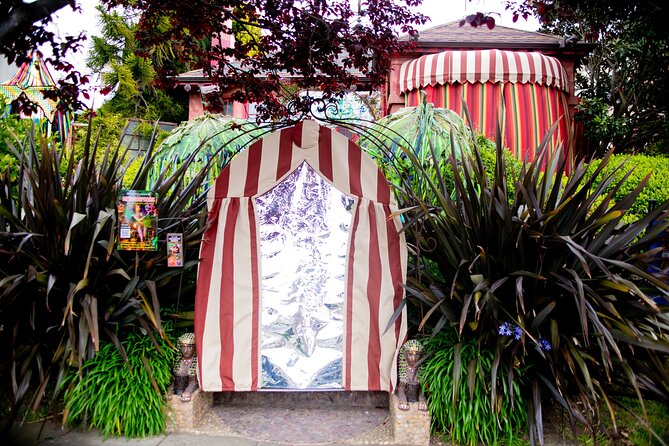
Saint Francis Wood is not where most first-time visitors point their camera. That’s exactly why this works. You’re not competing with the usual San Francisco crowds or noise. Instead, you’re in a calmer, residential setting where the garden experience feels like a world of its own.
The design idea is simple but effective: you enter a story, then you solve it step by step in real outdoor spaces. This is one of those tours where you stop thinking of it as entertainment and start experiencing it as an interactive ritual. The best part is that it stays gentle. You’re not being tested like an exam. You’re being invited to pay attention—to details, to the prompts, and to how your group thinks together.
The 90 minutes: how the Riddle of the Sphinx experience actually moves
This is a 1.5-hour guided session. It starts with the museum experience and then flows through the garden sequence. There’s a clear sense of “chapter breaks,” since each garden is tied to its own theme and emotional flavor.
Expect a mix of:
- looking and noticing
- working with your group to solve clues
- moving at the pace your guide sets
A common theme in guest feedback is that the guide doesn’t just walk you through. They facilitate. Guides like Nick and Marcelo are described as skilled at the balance between structure (so you know what to do next) and openness (so your group can make meaning as the riddles land).
If you tend to overthink puzzles, you’ll probably feel calmer once the rhythm kicks in. The tour is designed to keep you from freezing. You’re meant to play, then adjust, then play again until the story clicks.
The one-stop start: The Gregangelo Museum as your “gateway”
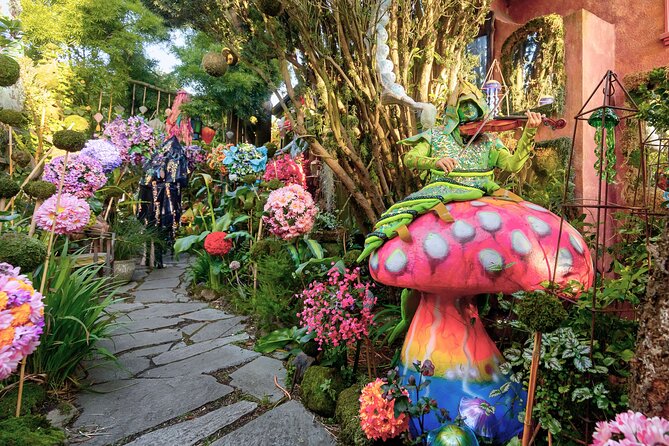
You’ll begin at the Gregangelo Museum at 225 San Leandro Way (San Francisco, CA 94127). Your session ends back at the same meeting point, so you’re not left figuring out transit or direction after the last clue.
At the start, you’re essentially given the tone and the mission. The museum experience frames the outdoor journey as a living puzzle—something you interact with, not something you simply watch. You also get a digital storybook included, which helps stitch together the experience and gives you something to reference as you move through each garden.
What helps a lot: the tour is private. So you can take time to talk through a clue without worrying about holding up strangers or feeling rushed by the clock. You’re also less likely to feel self-conscious if the experience nudges you into personal reflection.
Garden of Youth: relive your innocence without getting cheesy
The first garden is called the Garden of Youth, tied to the idea of reliving innocence. That phrase can sound like fluff, but in this format it lands differently. Youth here feels like playfulness: simpler answers, less performance, more curiosity.
In practical terms, the Garden of Youth is often where you find your footing. If you’re new to puzzle tours, this is the section that helps you understand how the riddles are meant to work—more pattern-seeking than trivia-hunting.
If you like experiences that feel light at the start and then gradually turn meaningful, you’ll appreciate this placement. It gives your group permission to treat the whole thing as a game first, and a journey second.
More museum hours worth the trip

Garden of Life: sensuality as a clue to attention
Next comes the Garden of Life, described with a theme of sensuality. That word can scare some people off, so here’s what matters: you’re not being put in a weird situation. The theme is more about being present—paying attention with more than your eyes.
You might notice how your group responds differently here than it did in the first garden. Some people get more emotional as the story shifts toward feelings and connection. Others get more focused as they realize the clues reward observation rather than speed.
This garden is often where the tour stops feeling like “escape room math” and starts feeling like “why did that clue hit me?” That’s part of the value. If you’ve ever walked through art and wondered what it means for your inner life, this gives you a structure to explore that question.
Garden of Wisdom: the unknown part that makes people slow down
The last stop is the Garden of Wisdom, where the theme is contemplating the Unknown. This is where the tour’s tone can get quietly powerful. The riddle-solving becomes slower and more reflective because you’re not just hunting for answers—you’re weighing what you think the experience is asking you to notice about yourself and your group.
Some guest feedback describes leaving feeling like they’d processed something personal, even like stepping out of therapy. That does not mean the tour is clinical. It just means the emotional effect can be real. If you’re the type who likes to keep everything on the surface, you might find the final garden asks for a bit more openness than you expected.
The good news: your guide is there to help you find your way through the story. And since it’s private, the reflection stays in your group’s comfort zone.
The role of your guide (Nick and Marcelo are real favorites)
The Gregangelo Museum experience depends heavily on facilitation. It’s not “follow the arrows.” Your guide shapes the rhythm: when to talk, when to listen, when to move on even if you’re stuck.
Two names show up in guest praise: Nick and Marcelo. Guests specifically liked guides who could explain details in a way that made the art and the setting feel legible. They also liked the guidance that kept the experience moving without killing the magic.
If you’re the kind of person who fears interactive tours will feel awkward, don’t worry too much. Reviews highlight that the experience can prompt bonding, laughter, and even tears—so it’s built for honest reactions, not polished ones.
Price and value: is $127 per person worth it?
At $127 per person for about 1 hour 30 minutes, the price sits in the “pay for an experience” category, not the “low-cost activity” category. So here’s how I’d judge the value fairly:
You’re paying for:
- a private, guided interactive format (not a self-guided stroll)
- a designed outdoor art setting with themed puzzle gardens
- a digital storybook included
- an experience that aims for emotional reflection, not just entertainment
If you’re comparing it to a standard museum ticket, this costs more. But it also functions differently. This is closer to a performance with participation than a venue with exhibits. For couples, groups of friends, or anyone who enjoys thinking in a playful way, the “private + personal” factor can make it feel like a bargain.
If, on the other hand, you’re only interested in looking at art without participating or discussing anything with your group, the value will depend on your tolerance for interactive play.
Who this works for (and who might want a different San Francisco plan)
This tour tends to click for people who:
- enjoy puzzles and games
- like interactive art rather than passive viewing
- want a group activity that can also feel meaningful
- enjoy experiences that mix light play with deeper reflection
It can also be great for special occasions. One couple used it for a birthday, and the bonding angle came up as a standout. The format naturally creates shared moments—solving together, debating answers, and reacting to the story shifts.
If you’re coming with someone who hates being asked to participate or talk, this might still work if they keep it inside their comfort zone. But you’ll have the smoothest time if your group is willing to play and respond to the experience.
What to do before you arrive (so you don’t feel behind)
The most important thing: show up mentally ready to play. Not “study,” not “figure out a system”—play.
Because this is an outdoor garden tour with puzzles, I suggest:
- wear comfortable shoes (you’ll be moving through gardens)
- plan for weather since it’s an outdoor experience
- bring your curiosity more than your skepticism
Also, don’t over-plan what you think the experience will be. Part of the point is that it surprises you. Guests describe it as unexpectedly deep, and that surprise is part of why people recommend it.
Finally, if you’re the kind of person who tends to dominate group decisions, try sharing space. The riddles often work better when your group’s strengths mix—someone good at spotting patterns, someone good at talking through feelings, someone willing to take the playful interpretation.
Quick practical details that matter on the day
A few things from the setup that help your day go smoothly:
- It’s a mobile ticket experience.
- It starts and finishes at the same meeting point on San Leandro Way.
- It’s described as near public transportation, which helps if you don’t want to deal with parking.
- Service animals are allowed.
- It’s rated as suitable for most travelers.
One more note: since your tour is private, you’ll want to arrive on time so your guide can start cleanly and you don’t feel rushed into the puzzle flow.
Should you book the Riddle of the Sphinx Garden Tour?
Book it if you want a San Francisco activity that feels original and personal. The big selling point isn’t just the art gardens. It’s the way the format turns art into a guided, puzzle-based conversation with yourself and your group. The fact that people leave talking about feeling transformed—sometimes like they’ve had a session of reflection—signals that this experience aims for more than surface fun.
Skip it (or at least reconsider) if you want a quiet, purely observational museum visit. This is built around participation, games, and solving. If you can embrace that, you’ll likely have one of the more memorable, human-scale art experiences in the city.
If you do book, go in with a playful attitude and a willingness to let the three gardens—Youth, Life, and Wisdom—change the mood of your thinking as you go.
FAQ
Where does the tour start?
The meeting point is 225 San Leandro Way, San Francisco, CA 94127, USA, and the tour ends back at the same location.
How long is the Riddle of the Sphinx tour?
It runs for about 1 hour 30 minutes.
How much does it cost?
The price is $127.00 per person.
Is this a private tour?
Yes. It’s listed as a private tour/activity, meaning only your group participates.
What is included with the ticket?
A digital storybook is included, and admission for the experience is part of the ticket.
Do I get a mobile ticket?
Yes. The experience uses a mobile ticket.
What are the three gardens called?
The gardens are Garden of Youth, Garden of Life, and Garden of Wisdom.
Is the tour in one place or multiple areas?
It’s an outdoor experience that takes you through three enchanted gardens as you solve the riddle.
Is it refundable if my plans change?
No. This experience is non-refundable and cannot be changed for any reason. If you cancel or amend, the amount paid will not be refunded.
Is it accessible and are service animals allowed?
The information provided says service animals are allowed and that most travelers can participate, with the site described as near public transportation.
More Tours in San Francisco
- Big Bus SF: Hop-on Hop-off Tour with 17 Stops and Sunset Option★ 4.0 · 4,539 reviews
- Napa and Sonoma Wine Country Full-Day Tour from San Francisco★ 4.5 · 4,455 reviews
- San Francisco: Hop-On Hop-Off Sightseeing Tour with 17 Stops★ 4.5 · 3,600 reviews
- Yosemite Highlights & Giant Sequoias Day Tour from San Francisco★ 4.5 · 3,455 reviews
- San Francisco Love Tour★ 5.0 · 2,830 reviews
- San Francisco: Alcatraz Island & 48-Hour Hop-On Hop-Off Tour★ 4.6 · 2,245 reviews
More Tour Reviews in San Francisco
- Muir Woods and Sausalito (Return by Bus or Ferry)★ 4.5 · 5,098 reviews
- Big Bus SF: Hop-on Hop-off Tour with 17 Stops and Sunset Option★ 4.0 · 4,539 reviews
- Napa and Sonoma Wine Country Full-Day Tour from San Francisco★ 4.5 · 4,455 reviews
- Small Group Yosemite and Giant Sequoias Day Trip from San Francisco★ 5.0 · 3,671 reviews
- San Francisco: Golden Gate Bay Cruise★ 4.7 · 3,644 reviews
- San Francisco: Hop-On Hop-Off Sightseeing Tour with 17 Stops★ 4.5 · 3,600 reviews
Out of the Fog: SF Museums
- California Academy of Sciences General Admission Ticket★ 4.0 · 586 reviews
- Aquarium of the Bay General Admission Ticket★ 3.5 · 299 reviews
- The Walt Disney Family Museum Admission Ticket in San Francisco★ 5.0 · 203 reviews
- SKIP THE LINE: Exploratorium Daytime Admission★ 4.5 · 165 reviews
- San Francisco Museum of Modern Art General Admission Ticket★ 4.5 · 143 reviews
- SF: San Francisco Museum of Modern Art (SFMOMA) Entry Ticket★ 4.5 · 124 reviews
Just Reviewed: Fresh San Francisco Tours
- Private San Francisco City Tour + Alcatraz (Tickets Incl., Max 6)
★ 5.0 · 3 reviews - San Francisco: North Beach Food and History Walking Tour
★ 5.0 · 3 reviews - San Francisco Bay Cruise and City Combo Tour
★ 3.5 · 3 reviews - San Francisco City Half-Day Private Custom Tour
★ 5.0 · 3 reviews - San Francisco: Muir Woods, Point Reyes, and Meadery Tour
★ 4.2 · 3 reviews - Private Muir Woods and Sausalito Half Day Tour
★ 5.0 · 3 reviews
San Francisco Museums & Attractions, compared.
 ★ 4.0California Academy of Sciences General Admission TicketFrom $49586 reviews
 ★ 3.5Aquarium of the Bay General Admission TicketFrom $28299 reviews
 ★ 5.0The Walt Disney Family Museum Admission Ticket in San FranciscoFrom $25203 reviews
 ★ 4.5SKIP THE LINE: Exploratorium Daytime AdmissionFrom $39165 reviews
 ★ 4.5San Francisco Museum of Modern Art General Admission TicketFrom $15143 reviews
 ★ 4.5SF: San Francisco Museum of Modern Art (SFMOMA) Entry TicketFrom $15124 reviews
 ★ 4.0de Young Museum General Admission TicketFrom $2097 reviews
 ★ 4.5Legion of Honor Museum General Admission TicketFrom $2085 reviews
Browse the lists this tour appears in