
Reviewed · SAN FRANCISCO MUSEUMS & ATTRACTIONS
SKIP THE LINE: Exploratorium Daytime Admission
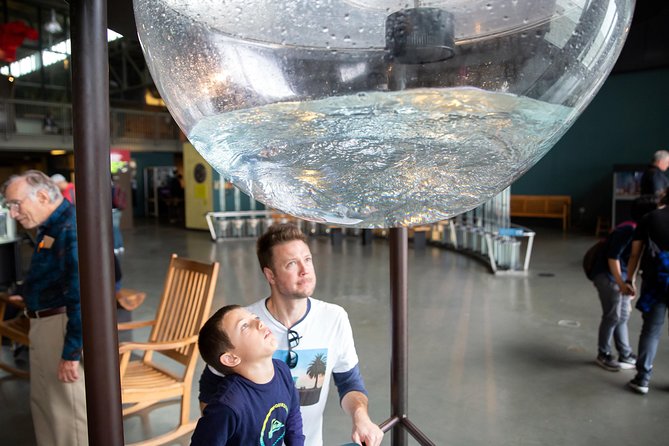
Science you can touch beats waiting. With skip-the-line entry, you’re set up to get inside the Exploratorium faster and spend your time playing with lights, mirrors, bubbles, and brain-science instead of standing in a ticket line. I also love the location at Pier 15 on the Embarcadero, which makes it easy to combine your museum time with a waterfront walk. The one thing to plan for: the museum can be very busy, especially with families and kids circulating through popular exhibits.
What makes this ticket worth looking at is the self-guided format. You get all-day general admission to explore at your own pace across six galleries, including an open-air space and a Bay Observatory with views of the Bay and Bay Bridge. If you go in with a simple plan and comfortable expectations, it’s a rare San Francisco attraction that works for adults and kids at the same time.
In This Review
- Quick reasons this skip-the-line ticket works
- Skip-the-Line Entry at Pier 15: What It Really Means
- Start Smart: A Simple Walking Plan Inside the Museum
- Your Self-Guided Route Through Six Galleries
- Gallery 1 and the Brain: Perception in Action
- Gallery 3, the Light Lab: Mirrors and Bubbles
- Tinkering Studio and Gallery 4: Mechanics, DNA, and Living Systems
- Outdoor Space and the Bay Observatory: Bay Bridge Views
- Price and Value for San Francisco Families
- Comfort, Crowds, and Food Breaks: Plan Like a Pro
- Tactile Dome and After Dark: What Costs Extra
- Who This Works Best For
- Should You Book This Skip-the-Line Day Ticket?
- FAQ
- How long does the Exploratorium daytime admission last?
- What is included in the $39.95 ticket price?
- Is the Tactile Dome included?
- Where is the Exploratorium located?
- Are maps available in different languages?
- Can children under 3 get in for free?
Quick reasons this skip-the-line ticket works
- Faster entry with a mobile skip-the-line ticket scanned at the museum entry point
- Pier 15 convenience between the Ferry Building and Fisherman’s Wharf/Pier 39
- Hands-on science for everyone across six galleries plus outdoor areas
- A flexible 3–5 hour visit that you can stretch if you’re still having fun
- Big views near the end at the Bay Observatory, overlooking the Bay and Bay Bridge
More galleries and halls out of the fog

Skip-the-Line Entry at Pier 15: What It Really Means
This is daytime admission with a goal you’ll feel immediately: getting into the Exploratorium faster. Instead of stopping at the ticketing counter at the entrance, you use your mobile ticket to bypass that step and head toward the entry point. That matters in San Francisco, where lines and foot traffic can chew up your afternoon.
The Pier 15 location is another practical win. You’re not tucked away in some side street; you’re right on the Embarcadero, between two classic visitor areas: the Ferry Building and Fisherman’s Wharf/Pier 39. Even if you only have a few hours for museums, you can still do a solid bayfront loop before or after.
One more value angle: this is all about self-guided wandering. You’re not paying for a talk or a guided route you have to follow. You’re paying for guaranteed access plus time saved at the entrance, so you can spend it at the exhibits.
Start Smart: A Simple Walking Plan Inside the Museum
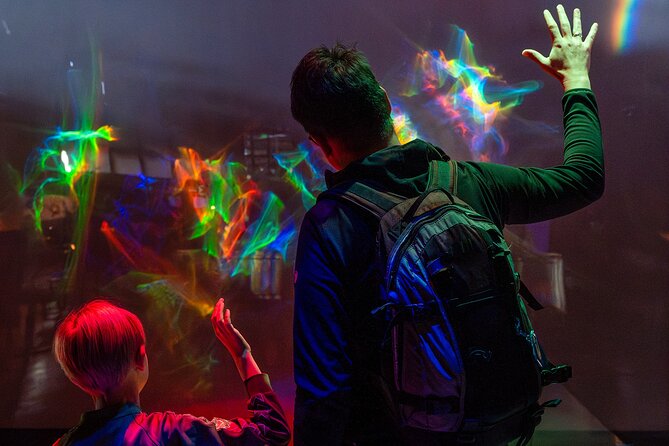
The Exploratorium is designed for repeat visits, but first-timers can lose time just figuring out where to go next. A helpful strategy is to start with one wing/side, then work through the museum and aim toward the exit without backtracking. This reduces extra walking and keeps your kid explorers from getting frustrated.
Here’s what I’d do if you want a smoother visit:
- Pick a “home base” gallery first (usually the one that matches your kids’ current obsession).
- Spend enough time to get hands-on, then move on before energy drops.
- Save the waterfront/Bay views near the end, so you have something rewarding when you’re a bit tired.
The museum’s layout includes six galleries plus an open-air space, so you’ll be moving. Coin-operated lockers are just past the Ticketing and Info desk, which is great if you arrive with a backpack you want to manage. If you’re carrying snacks, a jacket, or extra layers for the waterfront weather, plan to lock them up early.
Also grab a map when you arrive. Complimentary maps are available in many languages, so it’s worth checking that you can read what you need without hunting around later.
Your Self-Guided Route Through Six Galleries
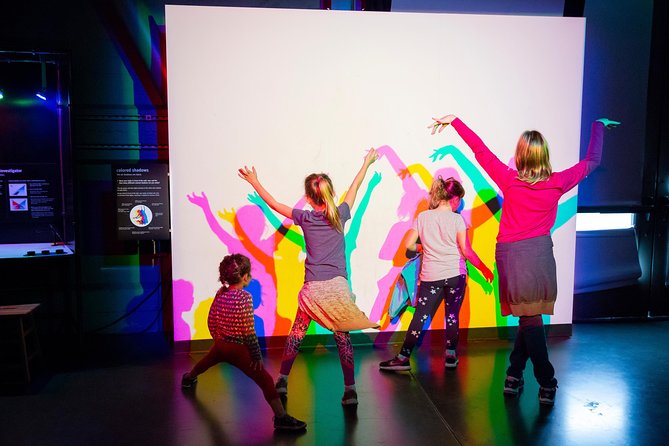
Your ticket gives you all-day general admission, and you can usually make the visit work in about 3 to 5 hours. That’s a good target, but don’t be surprised if you run long. The museum is built for hands-on time, and the science stations can easily pull you off schedule.
Think of the Exploratorium as a set of “mini museums” inside one place:
- Gallery areas focused on specific science themes
- A big outdoor/open-air element
- A Bay Observatory for views and big-picture thinking
A smart pacing tip: plan at least 30–45 minutes per major gallery if you want to actually do experiments, not just look. If your group wants to sample everything, you’ll shorten that time and accept that you’ll miss a few stations. If you want to leave feeling satisfied, build in a slower pace.
And yes, it can get crowded. You’ll see lots of kids and active adults around hands-on stations. If someone in your group gets overwhelmed by noise or crowds, take short breaks on seating areas and keep your movement pattern steady.
Gallery 1 and the Brain: Perception in Action
Gallery 1 focuses on the inner workings of the brain and how human perception works. This is one of those sections that feels good for adults because it’s about thinking—yet it stays fun because perception is something you can test with your own senses.
Expect exhibits that make you question what you’re seeing, and then invite you to try experiments that connect the visuals to how the brain processes information. One great aspect for mixed-age groups: you don’t need technical vocabulary to participate. You just need curiosity and a willingness to look twice.
If you’re traveling with teens or adults who want science with meaning, this gallery is a strong early stop. If your kids are little and need big physical activities, you can still start here, but be ready to swap to a more hands-on or playful section when attention gets short.
Set these beside your pick before booking:


Gallery 3, the Light Lab: Mirrors and Bubbles

Gallery 3 is where the museum gets especially visual and playful. This section is built around lights, mirrors, and bubbles—experiments you can often see working in front of you, not just read about.
This is ideal when you want fast engagement: kids tend to gravitate to reflective surfaces and moving light patterns, and adults often enjoy the simple cause-and-effect aspect. The nice thing is that you can stay for a short burst or spend longer, depending on your group.
If you’re planning your route, consider using this gallery as an anchor. It’s the kind of stop that can reset a day. When the museum feels busy and your group is restless, you can focus everyone on one “hands-on zone” and then move on when you’ve collected enough wow-moments.
Tinkering Studio and Gallery 4: Mechanics, DNA, and Living Systems
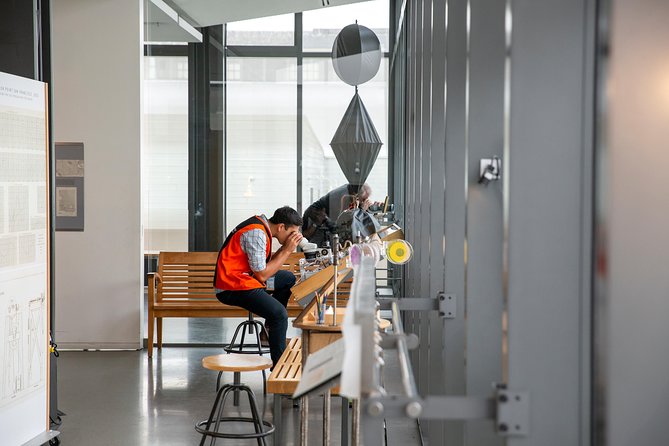
Two of the most compelling science experiences here are Tinkering Studio and Gallery 4.
In the Tinkering Studio, the focus is mechanical contraptions. This is where you see science as build-and-test. You’re not just viewing—you’re working with ideas of how objects interact, move, and behave. It’s also a good antidote to fatigue, because building and experimenting gives kids something active to do with their hands.
Gallery 4 takes a different approach. It moves into biology themes: DNA and cells, then expands outward to organisms and ecosystems. The goal is to connect the tiny world of cells to the bigger picture of how living things work together.
If you have a child who wants both “how it works” and “what it means,” pairing Tinkering Studio with Gallery 4 can be a smart one-two move. The mechanics satisfy the instant curiosity, and then the biology section gives that curiosity a broader, living context.
Also, plan for at least a few transitions. Every gallery has its own rhythm, and your group will do better if you move with intention rather than trying to cover everything at a sprint.
Outdoor Space and the Bay Observatory: Bay Bridge Views
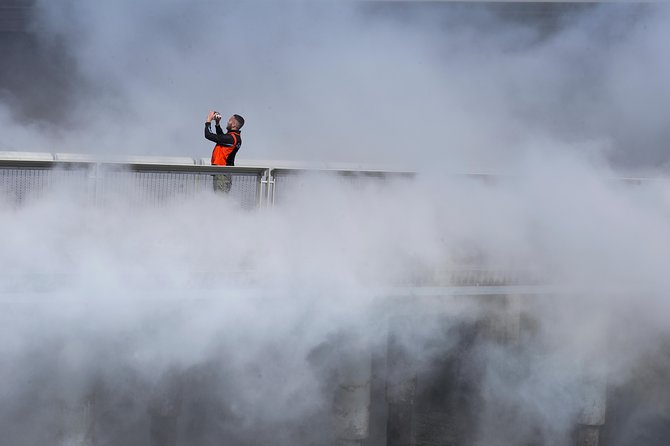
The Exploratorium includes outdoor and open-air components, not just indoor galleries. You’ll find an open-air gallery and an outdoor space that explores the natural and human forces shaping the unique San Francisco Bay Area.
Then there’s the Bay Observatory, which is a strong finish. You get sweeping views of the Bay and Bay Bridge. It’s not only a photo stop. It also helps the entire museum experience feel grounded in real geography—how place connects to science.
If you’re choosing when to do the Observatory, I recommend saving it for later in your visit. After a few hours of hands-on work, it feels like a reward that also slows your pace. If you do it first, the rest of the day can feel like you’re chasing that big view.
And because you’re on the waterfront, dress for it. Even in daytime, the Embarcadero can shift from warm to cool, and a light layer can turn a long wander into an enjoyable one.
Price and Value for San Francisco Families
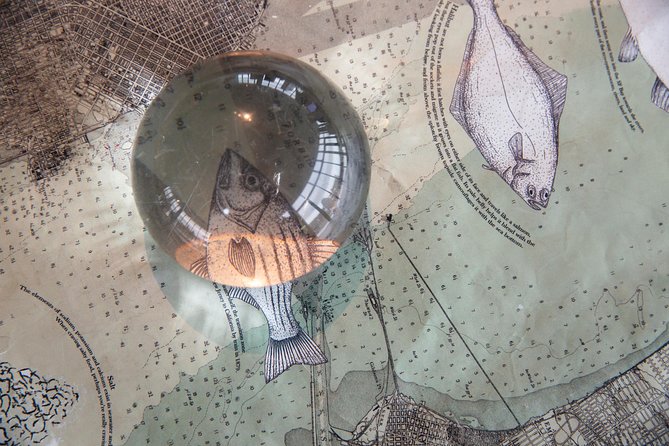
At $39.95 per person, this ticket is priced for convenience and time savings. You’re not just buying general admission—you’re paying for guaranteed daytime entry and an easier flow into the museum.
Is it worth it? Usually, yes, if:
- You have limited time in San Francisco and can’t afford a slow start
- You’re traveling with kids and want to reduce decision-stress at the entrance
- You dislike the uncertainty of whether you’ll lose time waiting for tickets
But here’s the honest trade-off: the skip-the-line part speeds up entry; it doesn’t reduce crowding inside. The museum can be very busy, so you’re still likely to wait at some high-demand interactive stations.
Also note what’s not included. The Tactile Dome experience requires separate tickets, and the After Dark Thursday evening event is not part of this daytime admission. If those are must-dos for your group, you’ll need to plan for extra cost and time.
Comfort, Crowds, and Food Breaks: Plan Like a Pro
The biggest “real life” variable at the Exploratorium is crowding. It’s a popular family destination, and during peak periods you’ll see lots of kids. That means busy exhibit stations, noise, and occasional pushing as people jockey for access.
Your best strategy is to plan for it:
- Go in with a simple route so you’re not constantly rerouting in the middle of congestion
- Take breaks before energy drops hard
- Set expectations early about sharing and waiting turns
Comfort helps more than you’d think. There are places to sit, and adults do tend to appreciate the benches when you’re watching kids experiment. If your group includes seniors or anyone who tires quickly, build in short pauses rather than assuming you’ll keep moving nonstop.
Food is another practical consideration. Food inside can be pricey, but you can usually leave to eat elsewhere and return with a hand stamp. That’s a big deal if you want a better meal without giving up your day at the museum.
Finally, if you’re bringing bags or coats, lockers are available just past the main Ticketing and Info area. Having a place for your stuff makes it easier to stay relaxed while you move between galleries.
Tactile Dome and After Dark: What Costs Extra
Two experiences are mentioned as separate from this daytime skip-the-line ticket.
First, the Tactile Dome experience isn’t included. It’s singled out as a separate add-on, so if you want it, you’ll need to budget for extra tickets and factor in time.
Second, After Dark Thursday evening admission is not included and is for ages 18+ only. If your trip overlaps with that event and you want a later, grown-up science outing, you’d need to book it separately.
If you’re traveling as a family, the good news is that the daytime museum alone is a full science day. You don’t need add-ons to have a great time.
Who This Works Best For
This ticket is especially well-suited to families and mixed-age groups. The exhibits are hands-on, so kids can actively participate, and adults can still learn because the science connects to real perception, mechanics, biology, and place.
It’s also a strong choice if you’re traveling with a group that doesn’t want a rigid schedule. Since it’s self-guided, you can follow interest rather than a timetable.
If you’re a couple or you’re traveling without kids, you’ll still likely enjoy the museum because many exhibits are designed for curiosity and experimentation, not just kid play. Just plan for the fact that it’s a family-focused venue, so the vibe can be lively.
Should You Book This Skip-the-Line Day Ticket?
If your priority is to get inside quickly and spend more time exploring, I’d book it. The skip-the-line element is exactly what makes sense for a family museum: it helps you start your day sooner and reduces friction when you’re juggling kids, bags, and schedule.
I’d especially recommend it if you’re planning a 3 to 5 hour museum window and you want your time to feel full, not stuck at the entrance. Just go in with a realistic expectation: the museum can be crowded inside, and you’ll still want your own pacing plan.
If you’re hoping to do only a quick look for less money, or you’re willing to gamble on timing at the entrance, you could consider other options. But with daytime admission to a top San Francisco attraction, this one is an easy “time-saver first” choice.
FAQ
How long does the Exploratorium daytime admission last?
Plan for about 3 to 5 hours. It’s self-guided, so you can move faster or spend longer depending on how much hands-on experimenting you want to do.
What is included in the $39.95 ticket price?
The ticket includes skip-the-line daytime admission to the Exploratorium and admission for the day.
Is the Tactile Dome included?
No. The Tactile Dome experience is not included and needs separate tickets.
Where is the Exploratorium located?
The museum is at Pier 15 on the Embarcadero, between the Ferry Building and Fisherman’s Wharf/Pier 39.
Are maps available in different languages?
Yes. Complimentary museum maps are available in English, Spanish, French, Italian, Traditional Chinese, Simplified Chinese, German, Portuguese, Arabic, Japanese, Korean, and Filipino.
Can children under 3 get in for free?
Yes. Children ages 3 and under get free admission.
More Skip the Line in San Francisco
- San Francisco: Skip-the-Line 1-Hour Bay Cruise by Boat★ 4.6 · 1,483 reviews
- San Francisco: Skip-the-Line Escape from The Rock Bay Cruise★ 4.4 · 1,393 reviews
- SKIP THE LINE: Exploratorium After Dark Thursdays (18+) Admission★ 4.5 · 51 reviews
More Tour Reviews in San Francisco
- Muir Woods and Sausalito (Return by Bus or Ferry)★ 4.5 · 5,098 reviews
- Big Bus SF: Hop-on Hop-off Tour with 17 Stops and Sunset Option★ 4.0 · 4,539 reviews
- Napa and Sonoma Wine Country Full-Day Tour from San Francisco★ 4.5 · 4,455 reviews
- Small Group Yosemite and Giant Sequoias Day Trip from San Francisco★ 5.0 · 3,671 reviews
- San Francisco: Golden Gate Bay Cruise★ 4.7 · 3,644 reviews
- San Francisco: Hop-On Hop-Off Sightseeing Tour with 17 Stops★ 4.5 · 3,600 reviews
Out of the Fog: SF Museums
- California Academy of Sciences General Admission Ticket★ 4.0 · 586 reviews
- Aquarium of the Bay General Admission Ticket★ 3.5 · 299 reviews
- The Walt Disney Family Museum Admission Ticket in San Francisco★ 5.0 · 203 reviews
- San Francisco Museum of Modern Art General Admission Ticket★ 4.5 · 143 reviews
- SF: San Francisco Museum of Modern Art (SFMOMA) Entry Ticket★ 4.5 · 124 reviews
- de Young Museum General Admission Ticket★ 4.0 · 97 reviews
Just Reviewed: Fresh San Francisco Tours
- Private San Francisco City Tour + Alcatraz (Tickets Incl., Max 6)
★ 5.0 · 3 reviews - San Francisco: North Beach Food and History Walking Tour
★ 5.0 · 3 reviews - San Francisco Bay Cruise and City Combo Tour
★ 3.5 · 3 reviews - San Francisco City Half-Day Private Custom Tour
★ 5.0 · 3 reviews - San Francisco: Muir Woods, Point Reyes, and Meadery Tour
★ 4.2 · 3 reviews - Private Muir Woods and Sausalito Half Day Tour
★ 5.0 · 3 reviews
San Francisco Museums & Attractions, compared.
 ★ 4.0California Academy of Sciences General Admission TicketFrom $49586 reviews
 ★ 3.5Aquarium of the Bay General Admission TicketFrom $28299 reviews
 ★ 5.0The Walt Disney Family Museum Admission Ticket in San FranciscoFrom $25203 reviews
 ★ 4.5San Francisco Museum of Modern Art General Admission TicketFrom $15143 reviews
 ★ 4.5SF: San Francisco Museum of Modern Art (SFMOMA) Entry TicketFrom $15124 reviews
 ★ 4.0de Young Museum General Admission TicketFrom $2097 reviews
 ★ 4.5Legion of Honor Museum General Admission TicketFrom $2085 reviews
 ★ 4.5SKIP THE LINE: Exploratorium After Dark Thursdays (18+) AdmissionFrom $2251 reviews
Browse the lists this tour appears in