
Reviewed · WALKING TOURS
San Francisco: Castro & LGBTQ Private Walking Tour
The Castro tells stories in plain sight. This private 2-hour walk starts at Harvey Milk Plaza and guides you through the Castro’s most meaningful corners, with a route you can shape around your interests.
I like the way the stops are specific, not generic. You’ll cover Milk’s former residence and camera shop, and you’ll also hear how the Castro shifted during the AIDS epidemic, with stories you can still feel when you look at the street.
The trade-off is that this is a walking tour. You won’t get guaranteed museum or monument entries, and the experience depends a lot on the guide’s focus and pace—some sessions can feel more chatty than tightly Castro-specific.
In This Review
- Key things you should notice on this Castro walk
- Where the tour begins: Hotel Castro to Harvey Milk Plaza
- Milk’s former residence and camera shop: learning by standing still
- Castro Theatre and the rainbow flag: what you’ll notice after the story
- The Castro’s transformation: sanctuary, visibility, and real stakes
- Rainbow flag origins: how a street symbol became worldwide
- Private and customizable: why exclusivity changes the tour
- Getting around: mostly walking, with possible public transport
- Price and value: $100 per person for a focused 2 hours
- How to make the most of your guide’s recommendations
- Who this tour suits best
- Should you book the Castro & LGBTQ private walking tour?
- FAQ
- How long is the San Francisco Castro & LGBTQ private walking tour?
- Where do I meet the guide?
- Is it a private tour?
- What languages are available for the live guide?
- Is the tour wheelchair accessible?
- What’s included, and can I cancel or pay later?
Key things you should notice on this Castro walk
- Start at Harvey Milk Plaza and build your understanding from the people who shaped the movement
- Milk’s former residence and camera shop bring activism down to real locations you can stand in front of
- Castro Theatre and the rainbow flag overhead give you a visual sense of pride and public visibility
- AIDS-era context in plain language so the neighborhood’s changes make sense, street by street
- Private-only group pace means you can ask questions and slow down when something grabs your attention
More of the Castro and its history
Where the tour begins: Hotel Castro to Harvey Milk Plaza
This tour meets right in the neighborhood, in front of The Hotel Castro. That matters more than it sounds. You’re not commuting from another part of San Francisco while the story stays stuck in your head. You’re already in the Castro’s rhythm before the first stop.
From there, you move to Harvey Milk Plaza, a landmark dedicated to the civil-rights icon. This is a smart starting point because it frames everything that follows. You’re not just learning dates. You’re learning why people organized, how visibility changed lives, and what it means to claim public space.
I also like that the tone is practical. A good guide here won’t just list facts. You’ll be looking at the neighborhood with new eyes—what’s there now, and what used to matter more than the architecture.
Milk’s former residence and camera shop: learning by standing still
One of the tour’s best strengths is that it doesn’t stay in theory. It takes you to places tied to Harvey Milk’s former residence and the camera shop connected to gay-rights activism.
Why this works: it forces your brain to map cause and effect. You can literally see how ordinary streets turn into meeting points. You can picture conversations, planning, flyers, and the human side of political work. The camera shop stop adds an extra layer, because photography and media are tools people used to make themselves visible.
There’s also an emotional component. Even if you don’t know Milk’s story going in, the tour gives you a grounded way to understand why activism wasn’t just marches and slogans. It was neighbors, businesses, and real courage in real locations.
Tip for you: slow down at these stops. If you take quick photos and walk past the explanation, you’ll miss the best part. Give yourself enough time to absorb what the guide is connecting.
Castro Theatre and the rainbow flag: what you’ll notice after the story
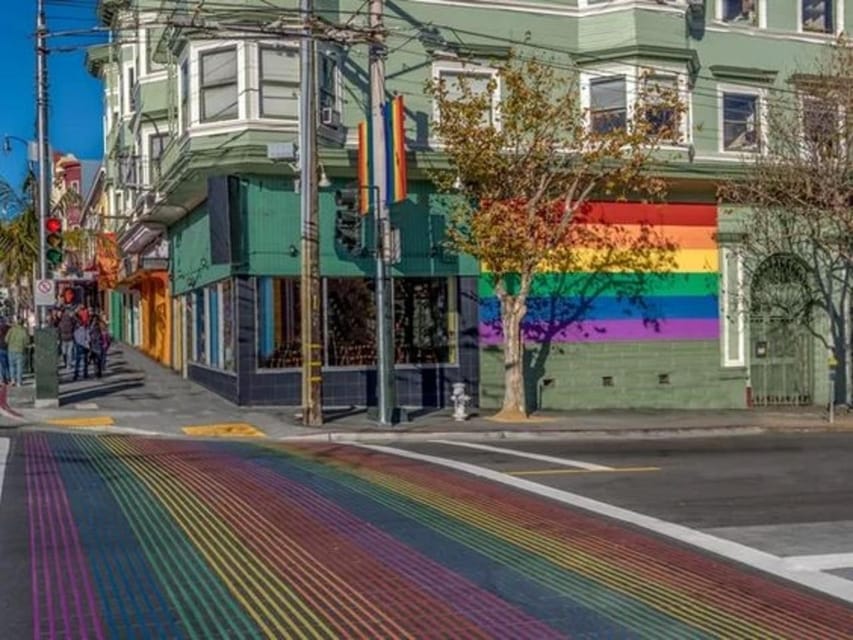
Next you’ll reach the Castro Theatre, where the rainbow flag flies. This is one of those places you might recognize from passing views or social media photos. On this tour, you’ll be taught what to look for and what the flag represents in context.
The guide’s job here is to connect symbolism to geography. Pride isn’t just an image. In the Castro, it’s tied to community survival, political visibility, and the message that identity belongs in public life.
What I love about this stop is the way it turns a visual detail into a learning moment. You start noticing the neighborhood as a message system: where people gather, what’s displayed, and how the community signals unity and diversity where everyone can see it.
If you’re the type who enjoys architecture and street-level design, you’ll likely have an easier time here. The explanation tends to tie buildings and storefronts to what those spaces meant for activism and community life.
The Castro’s transformation: sanctuary, visibility, and real stakes
As you walk through the neighborhood, the tour focuses on how the Castro became a kind of sanctuary for LGBTQ people—and the role it played during the AIDS epidemic.
That part is important, and it’s handled best when the guide explains the neighborhood as a living network. You’re not just hearing tragedy. You’re learning about mutual support and the community infrastructure that formed in response. You’re also learning why public spaces mattered: safety, belonging, and the right to be seen.
AIDS-era context can get heavy fast in other settings. Here, the street setting helps. You’re learning while moving, and that keeps the information from turning into a lecture. You’re absorbing it as part of the geography.
One practical thing to know: because it’s a walking tour, you’ll cover this context in manageable chunks. You won’t get every detail like a textbook. But you’ll leave with an understanding that you can use the next time you read about the Castro—or when you see related memorials and plaques.
The city at walking pace, more routes
Rainbow flag origins: how a street symbol became worldwide
Another highlight is learning about the origins of the rainbow flag, and how the symbol grew into a worldwide marker of LGBTQ pride.
This is valuable because the rainbow flag is everywhere now. People see it at events, on clothing, and in media. But it’s easy to forget that symbols have origin stories, and origin stories come from specific people and specific moments.
On this tour, you’ll connect that origin narrative back to what you see in the neighborhood today. The goal isn’t just trivia. It’s understanding why the flag means something different when you’re standing in the Castro instead of viewing it on a screen.
If you’re traveling with someone who only knows a few names or dates, this stop can be a great equalizer. Even if you’re starting from zero, you’ll understand why the story matters.
Private and customizable: why exclusivity changes the tour
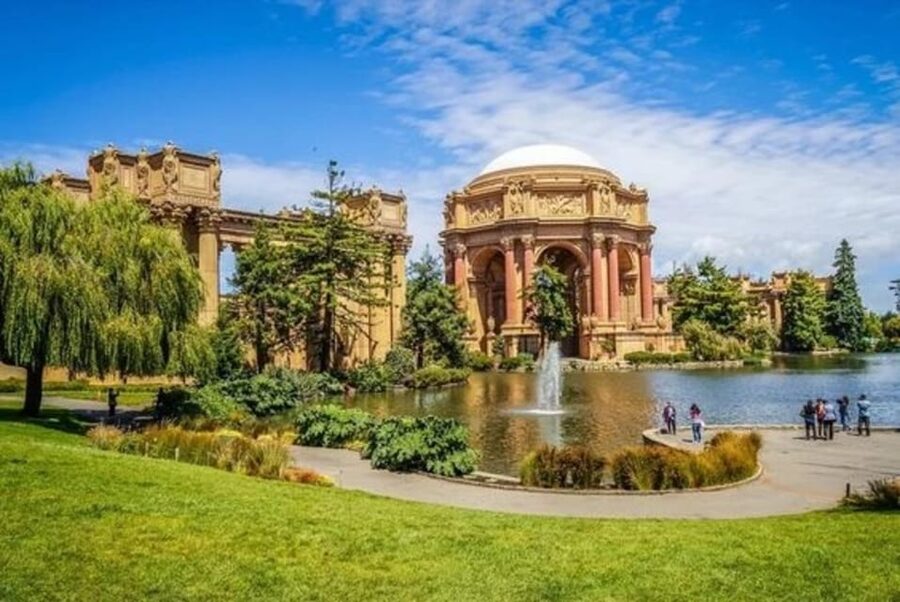
This is a private walking tour, meaning you won’t be grouped with strangers. That changes everything about how the guide can teach.
For you, it usually means:
- You can ask follow-up questions without worrying about time for another group.
- You can ask the guide to explain something at street level instead of rushing to the next stop.
- If the day’s energy feels different—quiet streets versus busier blocks—the guide can steer the pace.
The tour is also described as customizable, and that’s a real advantage in the Castro. Some people want deeper activism context. Others want the everyday feel of the neighborhood, the venues, and where people hang out. A good guide can adjust.
What I liked in the better-run sessions I saw referenced is that the guide didn’t treat this like a scripted slideshow. The strongest experiences came from guides who were flexible and treated questions as part of the journey, not a disruption.
Getting around: mostly walking, with possible public transport
Plan on being on your feet. The core format is a walking route. Local car transportation isn’t included, and the tour doesn’t promise entries into museums or monuments.
Public transport may come into play depending on which route option you select. The key point for your planning is simple: treat this as a neighborhood walk first, not a bus-and-stop sightseeing day.
For practical travel planning, that means:
- Build in time afterward for an unhurried stroll.
- Wear shoes that can handle San Francisco sidewalks and hills if your route wanders that way.
- Expect frequent stops for explanations and photos, especially around Milk and the Castro Theatre area.
Price and value: $100 per person for a focused 2 hours
At $100 per person, this isn’t a bargain-bin deal. But the value makes sense if you want a guided narrative in a sensitive, meaning-heavy neighborhood.
You’re paying for:
- Private exclusivity (no one else in your group)
- Customization
- A local guide who can connect the dots between sites, symbolism, and community change
- Extra advice for what else to do in San Francisco beyond this one district
Is it worth it? For me, it usually comes down to expectations. If you want a calm, respectful walk with context, it’s a strong use of money. If you want a schedule packed with museum entries and ticketed attractions, this may feel limited because entries and attraction tickets are not included.
Also, keep in mind that the experience quality depends on the guide. In the accounts I saw, the biggest variation wasn’t the geography. It was how tightly the guide stayed on Castro and LGBTQ-specific history versus more general San Francisco conversation.
If you book, I’d treat it like a conversation with a local expert, not a guaranteed script.
How to make the most of your guide’s recommendations
One of the tour’s underappreciated benefits is the time spent listening to the guide’s tips about other things to do in the city. That’s not just polite filler. It helps you turn one district visit into a smarter San Francisco day.
When the guide offers suggestions, ask one follow-up:
- Where should I go if I want more context about this topic?
- What’s the best way to pair this with another neighborhood I can reach easily?
Because the tour includes walking and possibly public transport, your guide will often know what combinations make sense on a realistic schedule.
If your guide offers venues to check out, note what fits your interests. The Castro has both historical landmarks and modern community spaces, and you’ll enjoy the city more if you choose based on your curiosity.
Who this tour suits best
This is a great fit if you:
- Want a private guide focused on LGBTQ history and the Castro’s meaning
- Prefer walking routes over sitting in a classroom setting
- Care about understanding symbols like the rainbow flag in context
- Like tours where you can ask questions and shape the pace
It may be less satisfying if you’re seeking:
- Museum-style depth with timed entries
- A tour that feels like a strict checklist of monuments
- A completely scripted, no-variation experience
Should you book the Castro & LGBTQ private walking tour?
I’d book it if you want a respectful, street-level introduction to the Castro’s LGBTQ legacy, with stops tied to Harvey Milk Plaza, Milk’s former residence and camera shop, and the Castro Theatre. The private format plus the guide’s city advice can make the price feel reasonable for what you’re getting in context and convenience.
I’d think twice if you’re hoping for lots of paid entries and attractions, since those are not included. And because guide quality can vary, I’d choose this tour when you’re ready to learn through conversation and walking, not when you need a guaranteed, uniform script.
If you want, tell me your travel dates and what you already know about Harvey Milk and the Castro. I can help you decide what to prioritize during the 2 hours so you leave with the story fully clicking.
FAQ
How long is the San Francisco Castro & LGBTQ private walking tour?
The tour lasts 2 hours.
Where do I meet the guide?
Meet your guide in front of The Hotel Castro.
Is it a private tour?
Yes. It’s private and exclusive, so there won’t be anyone else in your group.
What languages are available for the live guide?
The guide is available in English, French, Italian, and Spanish.
Is the tour wheelchair accessible?
Yes, the tour is wheelchair accessible.
What’s included, and can I cancel or pay later?
The tour includes a private walking experience, customization, and walking plus public transport (except if you select one of the options). It also includes help from the team to book tickets for desired visits. Entry to monuments and museums, food and drinks, tickets to attractions, and local transportation around the city are not included. You can cancel up to 24 hours in advance for a full refund, and you can reserve now and pay later.
More Tours in San Francisco
- Big Bus SF: Hop-on Hop-off Tour with 17 Stops and Sunset Option★ 4.0 · 4,539 reviews
- Napa and Sonoma Wine Country Full-Day Tour from San Francisco★ 4.5 · 4,455 reviews
- San Francisco: Hop-On Hop-Off Sightseeing Tour with 17 Stops★ 4.5 · 3,600 reviews
- Yosemite Highlights & Giant Sequoias Day Tour from San Francisco★ 4.5 · 3,455 reviews
- San Francisco Love Tour★ 5.0 · 2,830 reviews
- San Francisco: Alcatraz Island & 48-Hour Hop-On Hop-Off Tour★ 4.6 · 2,245 reviews
More Tour Reviews in San Francisco
- Muir Woods and Sausalito (Return by Bus or Ferry)★ 4.5 · 5,098 reviews
- Big Bus SF: Hop-on Hop-off Tour with 17 Stops and Sunset Option★ 4.0 · 4,539 reviews
- Napa and Sonoma Wine Country Full-Day Tour from San Francisco★ 4.5 · 4,455 reviews
- Small Group Yosemite and Giant Sequoias Day Trip from San Francisco★ 5.0 · 3,671 reviews
- San Francisco: Golden Gate Bay Cruise★ 4.7 · 3,644 reviews
- San Francisco: Hop-On Hop-Off Sightseeing Tour with 17 Stops★ 4.5 · 3,600 reviews
The Castro, Continued
- San Francisco LGBTQ Walking Tour with Local Guide★ 5.0 · 600 reviews
- San Francisco Urban Hike: Castro and Twin Peaks★ 5.0 · 71 reviews
- San Francisco Castro Mission Loop Tour★ 5.0 · 12 reviews
- San Francisco: Castro District LGBTQ+ History Tour★ 5.0 · 9 reviews
- Castro District LGBTQ+ Historic Tour★ 5.0 · 9 reviews
- San Francisco : Mission and Castro districts tour in French★ 4.6 · 6 reviews
Just Reviewed: Fresh San Francisco Tours
- Private San Francisco City Tour + Alcatraz (Tickets Incl., Max 6)
★ 5.0 · 3 reviews - San Francisco: North Beach Food and History Walking Tour
★ 5.0 · 3 reviews - San Francisco Bay Cruise and City Combo Tour
★ 3.5 · 3 reviews - San Francisco City Half-Day Private Custom Tour
★ 5.0 · 3 reviews - San Francisco: Muir Woods, Point Reyes, and Meadery Tour
★ 4.2 · 3 reviews - Private Muir Woods and Sausalito Half Day Tour
★ 5.0 · 3 reviews
Walking Tours, compared.
 ★ 5.0North Beach & Little Italy Walking Tour: Food, History & FlavorFrom $861,044 reviews
 ★ 5.0San Francisco Chinatown Walking TourFrom $59778 reviews
 ★ 5.0San Francisco LGBTQ Walking Tour with Local GuideFrom $40600 reviews
 ★ 5.0Chinatown Walking Tour: Food, History & FlavorFrom $86575 reviews
 ★ 5.0#1 Sonoma Walking Food, Wine Tasting & History Tour (Public Tour)From $189457 reviews
 ★ 4.8Chinatown Culinary Walking TourFrom $84265 reviews
 ★ 5.0San Francisco Ghost Hunt Walking TourFrom $25177 reviews
 ★ 5.0Private Walking Tour of San FranciscoFrom $49150 reviews
Browse the lists this tour appears in