
Reviewed · HIKING & TREKKING
San Francisco Urban Hike: Castro and Twin Peaks
Twin Peaks comes with a workout.
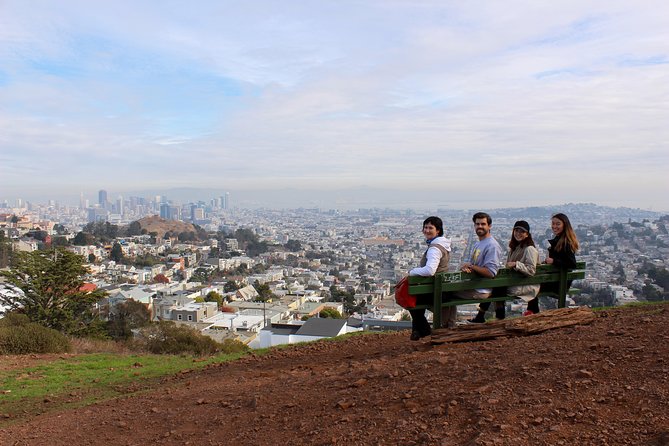
This guided Castro to Twin Peaks hike mixes serious hill climbing with the kind of goofy fun SF locals love, from Seward Street Slides to a eucalyptus trail behind Sutro Tower. I like how the route adds variety instead of turning into one long grind, and I also love the payoff: big city-and-bay views you only get after you earn them. One real consideration: the path is hilly, includes stair-heavy segments, and needs a moderate fitness level.
You’ll start at 429 Castro St, at the historic Castro Theatre, and you’ll end right back where you began. That loop makes it easy to plan dinner and coffee afterward, and it’s a big plus when you’re done with stairs and ready for something tasty. Also, with a maximum of 15 people and a professional guide, it feels personal rather than crowded.
In This Review
- Key Points at a Glance
- Castro Theatre to Hill Country: Why This Hike Starts Here
- Seward Street Slides: The Perfect Mid-Hike Break for Photo Ops and Smiles
- Kite Hill Open Space: A Local Viewpoint Before the Big Summits
- Sutro Tower and the Eucalyptus Forest: The City’s Wild Switch
- Twin Peaks Summit Views: Waterfront and East Bay in One Breathless Moment
- Tank Hill and the 211-Step Pemberton Place Stairway Descent
- What This Hike Feels Like: Distance, Intensity, and Real-World Comfort
- Guides and the “Insider” Factor: How the Conversation Shapes the Walk
- Tickets, Timing, and What You Need to Know Before You Go
- Should You Book the Castro and Twin Peaks Urban Hike?
- FAQ
- How long is the hike?
- Where do I start and end?
- What should I wear and bring?
- Is this tour suitable for children?
- Does the tour run in bad weather?
- Is the tour offered in English?
- Is the group size limited?
Key Points at a Glance
- Castro Theatre start: learn the story of this classic movie palace before you hit the hills
- Seward Street Slides: cardboard-fueled fun on curved concrete in the middle of a city park
- Kite Hill Open Space: a green hilltop spot that’s easy to spot, hard to find, and popular with locals
- Sutro Tower to Twin Peaks: eucalyptus forest walking plus a less-marked resident trail to the summit
- Tank Hill + 211-step Pemberton Place: more views, then a stairway descent through homes and private gardens
- Small group energy: up to 15 people, so the guide can keep the pace realistic
More of the Castro and its history

Castro Theatre to Hill Country: Why This Hike Starts Here
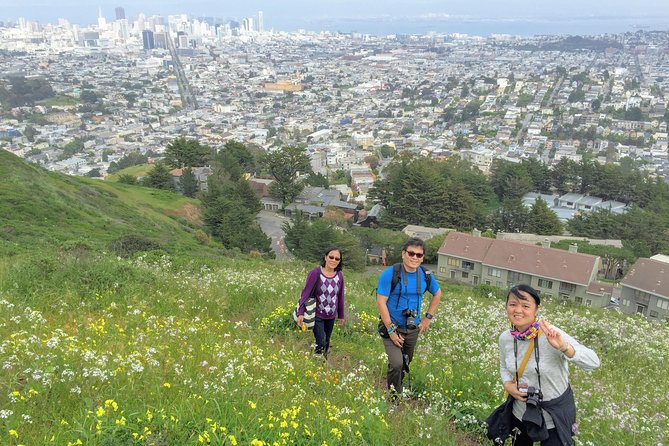
The smartest part of this whole experience is the first step: meeting at the Castro Theatre. It’s a built-in landmark that helps you orient fast, and the tour begins with a quick history of this classic movie palace. That matters more than you might think. When you start in a place with identity, the rest of the neighborhoods feel connected instead of random.
Then comes the part that makes San Francisco feel like San Francisco: hills. Your guide sets the rhythm early, so you’re not just suffering uphill without context. I like that the tour openly frames this as a hike that covers about 5 miles (8 km) in roughly 3 hours, which gives you enough time to enjoy sights without feeling like the whole day disappears.
Practical tip: wear comfortable shoes or hiking boots. This is not the time for slick sneakers or sandals. The hills and stair segments demand grip, and good footwear makes the walk feel safer and more fun.
Seward Street Slides: The Perfect Mid-Hike Break for Photo Ops and Smiles
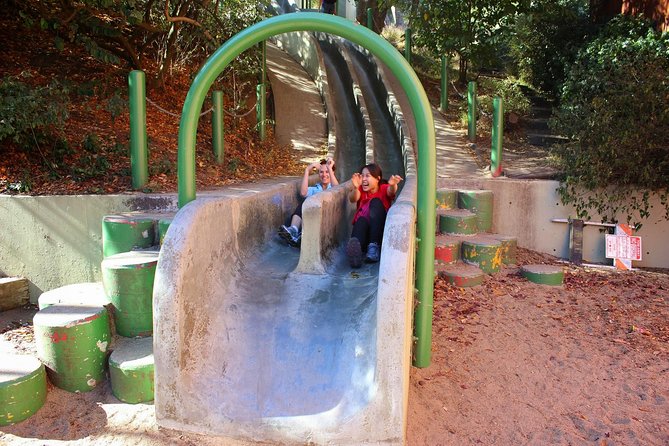
Right after you get a feel for Castro’s energy, you shift into playful territory at the Seward Street Slides. This is in a city park and it’s exactly what it sounds like: curved, cement slides built for maximum laughter. The twist is that you do it the old-school way—grab a piece of cardboard and slide.
This stop is only around 10 minutes, but it refreshes your brain. You go from steep city walking to something light and silly, which is a nice reset before the viewpoints start demanding more effort. It’s also a rare chance to see the city’s sense of humor in action—SF can be serious and scenic, sure, but it also knows how to make leisure feel spontaneous.
What to watch for: if you’re not used to carrying your energy through hills, treat Seward Street Slides like a recharge station. Stand where you can watch others go, take a few photos, and then get moving before your body cools off.
Kite Hill Open Space: A Local Viewpoint Before the Big Summits
Next up is Kite Hill Open Space, a green space with a funny personality: it’s easy to see, but hard to find. That description is spot-on for how many of SF’s best viewpoints work—you’re looking for a path that doesn’t scream tourist route.
From the top, you get views toward downtown and Twin Peaks. Even if you’ve seen photos of Twin Peaks before, this viewpoint helps you understand the geography. You start noticing how neighborhoods climb and how ridgelines shape the skyline. It’s a great “set the stage” moment, especially since the tour later heads into Sutro Tower country and up toward the summit.
This is also one of those stops that feels like a neighborhood ritual. Kite Hill is popular with residents, so the vibe isn’t manufactured for sightseeing. That balance—small local atmosphere plus big sight lines—is one of the best reasons to book this kind of hike rather than just taking a rideshare to overlooks.
Practical tip: bring water. Even on a cooler day, the uphill segments add up quickly, and the breaks feel better when you’re hydrated.
Sutro Tower and the Eucalyptus Forest: The City’s Wild Switch
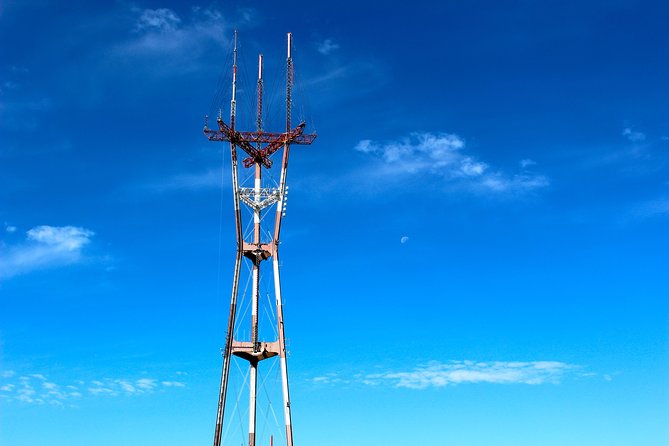
Then the tour shifts into something more surprising: the area behind Sutro Tower, where you walk through an eucalyptus forest and head onto an unmarked hiking trail that follows resident paths. Sutro Tower itself is a must-see landmark, and you’ll stop at its base for a moment to appreciate scale. The tower is almost 900 feet tall, and its top is described as the highest point in San Francisco.
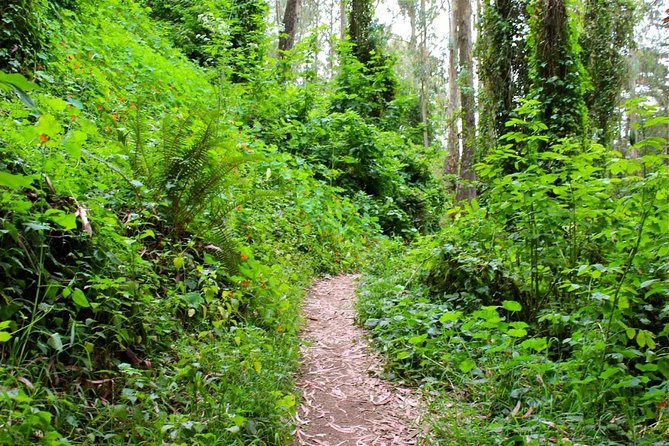
The eucalyptus forest changes the mood fast. You get a sense of being near the city without being surrounded by it. The sound changes. The air feels a little different. And the walking feels more like “trail time” than “sidewalk time,” even though you’re still in urban SF.
This is also where the hike starts asking more of your legs. Expect uneven footing and the kind of path that rewards calm steps. The guide keeps you moving, but you’re the one who chooses your pace. If you rush here, you’ll feel it later at Twin Peaks and on the stair descent.
Small-group note: with up to 15 people, you can usually find your own rhythm without feeling like you’re in a conga line. Still, follow the guide’s cues—when you’re on resident paths, they help you stay on track.
Painted Ladies to the Presidio, more landmarks



Twin Peaks Summit Views: Waterfront and East Bay in One Breathless Moment
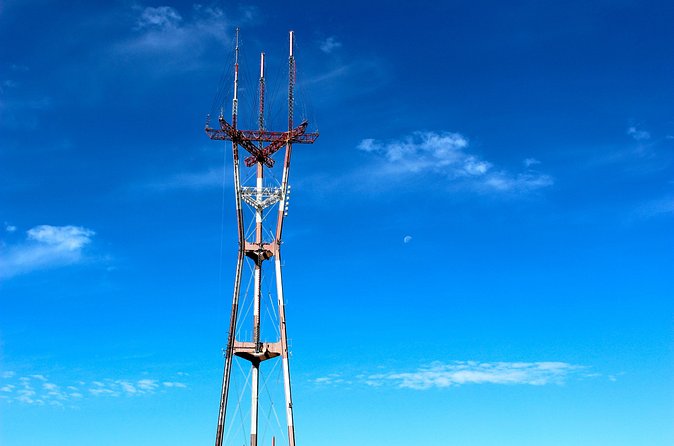
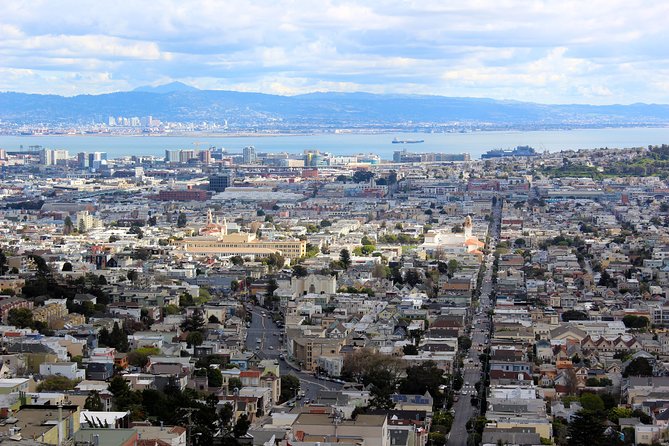
Twin Peaks is the centerpiece, and the tour doesn’t treat it like a quick photo stop. You hike up to a summit overlook and get panoramic views that reach across the waterfront and toward the East Bay Hills.
The feeling here is hard to fake. You don’t just see “a pretty city.” You get the sense of SF as a set of ridges and basins, with water and land shaping everything. That’s why this stop hits even if you’ve already visited other lookouts. You’re seeing the city from a working, lived-in vantage point—achieved by actual climbing.
Most people need a little pause once they reach the top, and that’s built into the experience. Take 5 to 10 minutes to catch your breath, then enjoy the view in sections. Look south, then east. It helps your photos look less like a single skyline shot and more like an understanding of the terrain.
Practical tip: dress in layers. Wind can be real at viewpoints, and you’ll feel the temperature shift between forest walking and open summit air.
Tank Hill and the 211-Step Pemberton Place Stairway Descent
After Twin Peaks, you go to Tank Hill, another neighborhood park with views and a relaxed local feel. This is where you’ll see the ocean and bay, plus Golden Gate Bridge views along with downtown. It’s also popular for dog walking, so you’ll likely notice a more everyday pace here compared to the summit areas.
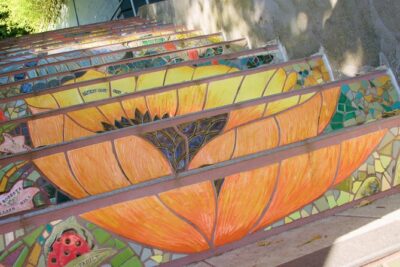
Then comes the finale that makes this tour feel genuinely SF: the 211-step Pemberton Place Stairway. This descent winds through neighborhood houses and private gardens. It’s not just “more stairs,” either. It’s a corridor of architecture and greenery that turns the ending into a mini walking tour.
Be honest with yourself about the stairway: your legs will be tired, and your quads might complain. The key is to slow down and keep your steps small. A stair descent is often harder than the ascent for some people because your body tries to control speed. Let the guide set the flow, use any handrails you find, and take breaks if you need them.
If you want an emotional “wrap” to the entire experience, this is it. You finish with scenery that feels personal—homes, gardens, and a route that looks like it belongs to locals more than visitors.
What This Hike Feels Like: Distance, Intensity, and Real-World Comfort
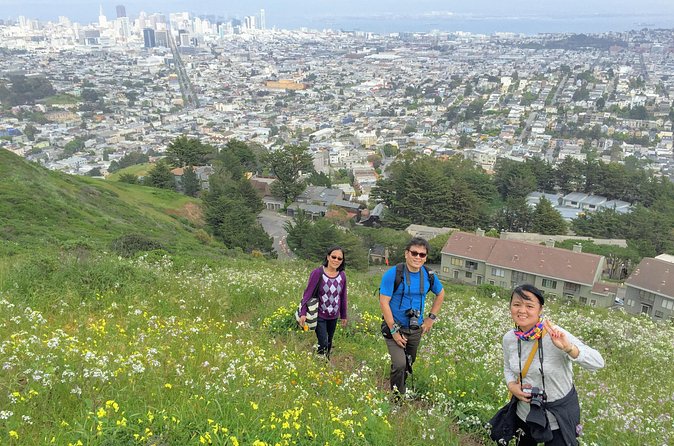
This is described as a moderate 5-mile (8 km) hike over about 3 hours. The distance sounds manageable until you remember San Francisco is built on hills. What makes this hike truly “moderate” for the right person is the variety: breaks in scenic spots, plus a guide who manages the pace.
Still, I strongly recommend planning for more work than a flat 5-mile walk. Expect hills and stair-heavy segments. People who do well on this tour typically:
- walk regularly (not just occasional sightseeing steps)
- can handle stairs without needing frequent pauses
- bring water and dress for changing temps
Also note the age guidance: it’s not recommended for children 12 and younger. That isn’t just about stamina—it’s about safety and timing on stairs and uneven paths.
Practical tip: if you’re between shoe types, choose the more supportive option. Your feet will thank you on the descent.
Guides and the “Insider” Factor: How the Conversation Shapes the Walk
The biggest praise this hike earns is not just the views. It’s the people leading it. On past outings, guides like Kevin, Val, Dawn, Alex, and Max have been mentioned for being friendly and local, and for making the route feel welcoming rather than intimidating.
Here’s what that usually changes for you: you stop seeing hills as obstacles and start seeing them as stories. Guides share interesting facts about San Francisco’s past and neighborhood character, and you may hear details that connect land, migration, and local history to what you’re walking through. One guide (Alex) has been noted as having written a book on these hikes, which suggests you’ll get extra context when questions come up.
You’ll also appreciate the small-group setup. With a maximum of 15 people, the guide can keep everyone together while still allowing pauses for photos and breath.
Bonus idea: if your guide offers restaurant suggestions afterward, take them. The Castro area has a lot to offer, and finishing near the Castro Theatre makes it easy to act on good recommendations fast.
Tickets, Timing, and What You Need to Know Before You Go
This is a mobile-ticket tour with professional guide support. There’s no hotel pickup, so plan to reach the Castro Theatre at 429 Castro St. The start time is 1:30 pm, and the tour ends back at the meeting point.
About admissions: you get free admission at several stops, including the Castro Theatre, Seward Street Slides, Kite Hill Open Space, Twin Peaks, and Sutro Tower. Tank Hill includes admission. That means you’re mostly paying for the guided route, the pacing, and access to the walking experience that strings all these places together.
It runs rain or shine. If it’s raining and you’d rather not go, you can reschedule or request a refund. And if weather cancels it due to poor conditions, you’ll either get another date or a full refund. (So yes, this is an outdoor workout, but the provider still builds in weather flexibility.)
Practical tip: bring drinking water. You’ll feel better on the uphill sections, and it’s one less thing to worry about when the stair descent starts.
Should You Book the Castro and Twin Peaks Urban Hike?
Book it if you want a San Francisco experience that feels earned and personal. This tour works especially well for:
- couples and friends who want views plus variety
- people who like neighborhood walking more than bus-and-stop sightseeing
- anyone excited by both scenery and a bit of silliness (cardboard slides count)
Skip it if you know you struggle with hills and stairways, or if you’re looking for an easy stroll. This is not a “sit on a bench and admire the skyline” plan. It’s walking with purpose, and the purpose is getting to places you’d miss without guidance.
If you’re ready for a moderate workout, I think you’ll love the mix of Twin Peaks panoramas, Sutro Tower landmark energy, eucalyptus-trail calm, and the stairway finish through real homes. That combination is what makes this hike feel different from the usual SF viewpoint circuit.
FAQ
How long is the hike?
It lasts about 3 hours.
Where do I start and end?
You start and end at the Castro Theatre at 429 Castro St, San Francisco, CA 94114.
What should I wear and bring?
Wear comfortable shoes or hiking boots, dress in layers, and bring drinking water.
Is this tour suitable for children?
It is not recommended for children 12 years and younger.
Does the tour run in bad weather?
It runs rain or shine. If it’s raining and you prefer not to attend, you can reschedule or request a refund.
Is the tour offered in English?
Yes, it’s offered in English.
Is the group size limited?
Yes. The tour has a maximum of 15 travelers.
If you tell me your fitness level and when you’re traveling, I can help you decide if this one fits your plan (and what else pairs well with it in the Castro).
San Francisco on Foot
- Hidden Stairways of San Francisco★ 5.0 · 244 reviews
- Hidden Stairways of San Francisco★ 5.0 · 24 reviews
- San Francisco Presidio Walking Tour★ 5.0 · 19 reviews
- Monkey Mountain Hike★ 5.0 · 17 reviews
- San Francisco Urban Hike: Coit Tower, Lombard Street and North Beach★ 5.0 · 11 reviews
- Iconic San Francisco Urban Hiking Tour★ 5.0 · 7 reviews
From the Marina to the Presidio
- Painted Ladies San Francisco City Tour★ 5.0 · 2,081 reviews
- Painted Ladies Wine Country Tour★ 5.0 · 372 reviews
- San Francisco: Golden Gate Bridge and Lombard GoCar Tour★ 4.5 · 355 reviews
- Hidden Stairways of San Francisco★ 5.0 · 244 reviews
- Painted Ladies Private San Francisco Tour★ 5.0 · 125 reviews
- 2HR Golden Gate Bridge and Lombard Loop GoCar Tour★ 4.5 · 80 reviews
The Castro, Continued
- San Francisco LGBTQ Walking Tour with Local Guide★ 5.0 · 600 reviews
- San Francisco Castro Mission Loop Tour★ 5.0 · 12 reviews
- San Francisco: Castro District LGBTQ+ History Tour★ 5.0 · 9 reviews
- Castro District LGBTQ+ Historic Tour★ 5.0 · 9 reviews
- San Francisco : Mission and Castro districts tour in French★ 4.6 · 6 reviews
- Castro District LGBTQ+ History Tour★ 5.0 · 5 reviews
Just Reviewed: Fresh San Francisco Tours
- Private San Francisco City Tour + Alcatraz (Tickets Incl., Max 6)
★ 5.0 · 3 reviews - San Francisco: North Beach Food and History Walking Tour
★ 5.0 · 3 reviews - San Francisco Bay Cruise and City Combo Tour
★ 3.5 · 3 reviews - San Francisco City Half-Day Private Custom Tour
★ 5.0 · 3 reviews - San Francisco: Muir Woods, Point Reyes, and Meadery Tour
★ 4.2 · 3 reviews - Private Muir Woods and Sausalito Half Day Tour
★ 5.0 · 3 reviews
Hiking & Trekking, compared.
 ★ 4.9From SF: Yosemite Day Trip with Giant Sequoias Hike & PickupFrom $2391,331 reviews
 ★ 4.4Day Trip to Yosemite with Giant Sequoias HikeFrom $209290 reviews
 ★ 5.0Monkey Mountain Hike17 reviews
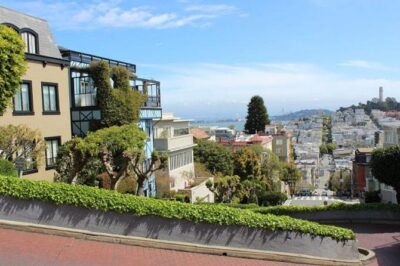 ★ 5.0San Francisco Urban Hike: Coit Tower, Lombard Street and North BeachFrom $5411 reviews
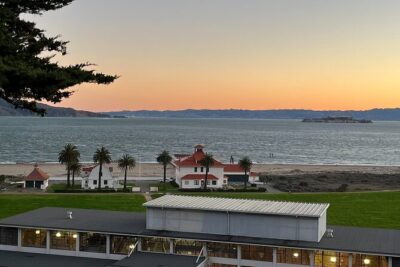 ★ 5.0Iconic San Francisco Urban Hiking TourFrom $497 reviews
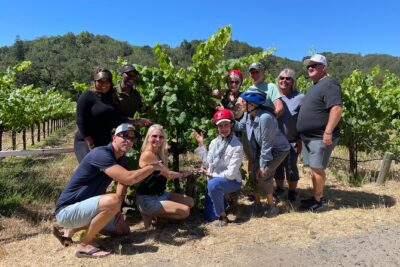 ★ 4.5Sonoma Trike and Hike – 3 hour guided tourFrom $1755 reviews
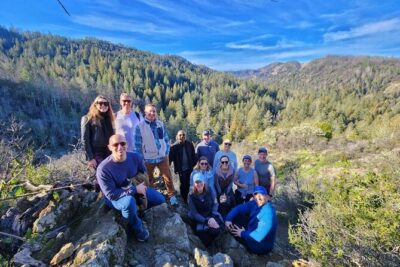 ★ 5.0Napa Valley Redwood HikeFrom $2255 reviews
Browse the lists this tour appears in