
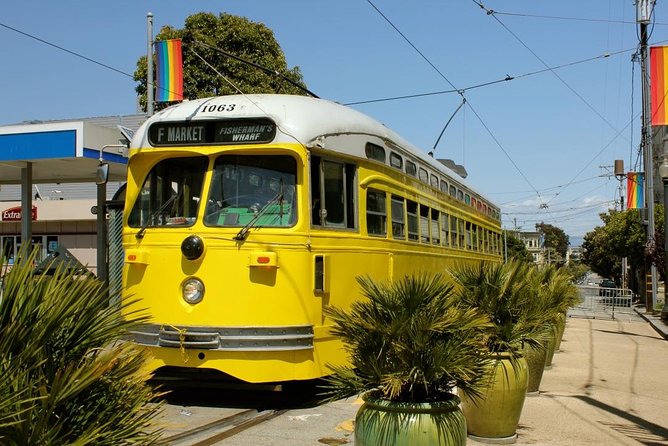
Reviewed · CASTRO & LGBTQ+ TOURS
San Francisco Castro Mission Loop Tour
San Francisco gets personal fast on foot. This Castro Mission Loop Tour is a guided walk that helps you connect the dots between two of the city’s most storied neighborhoods—Castro and the Mission—without feeling like you’re just collecting landmarks.
I like the small-group feel because it keeps the pace friendly and the conversations real, not rushed. I also love the story-first guiding, with a focus on culture, street-level details, and neighborhood history that you’d miss if you wandered on your own.
One thing to plan for: expect hills and a good chunk of walking. The tour notes a moderate fitness level, so wear shoes you trust on sloped sidewalks and stairs.
In This Review
- Key things to know before you go
- Why the Castro to Mission Loop Works So Well
- Meet at Castro Street and Market Street: Getting Started Smoothly
- Stop 1: Castro District, Castro Theatre, and Liberty Hill
- Stop 2: Mission District Alleys, Murals, Buried Lagoon, and Victorian Streets
- Guide Style: Why This Walk Feels Like City Lore, Not a Lecture
- Price and What You Get for $65
- Timing, Pace, and How to Prepare for the Hills
- Who This Tour Fits Best
- Should You Book the San Francisco Castro Mission Loop Tour?
- FAQ
- How long is the San Francisco Castro Mission Loop Tour?
- What does the tour cost?
- Where does the tour start?
- Is the tour offered in English?
- Are tickets included for the stops?
- Are snacks included?
- Is cancellation free?
Key things to know before you go
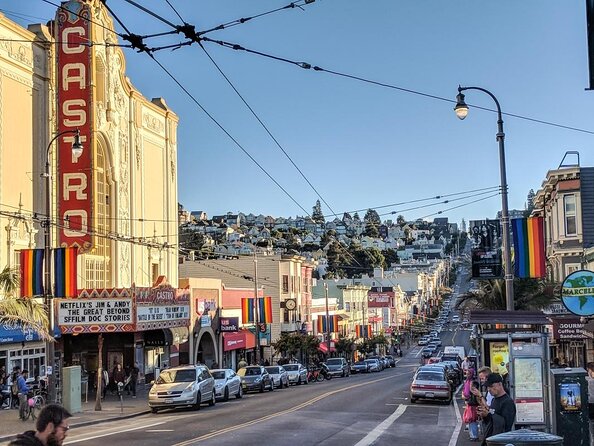
- Small-group size: kept intentionally tight for a more personal experience
- Two neighborhoods, two moods: Castro landmarks first, then Mission streets and murals
- Murals and architecture: you’ll get past the main sights and into the residential texture
- Local lore that adds up: your guide ties landmarks to how these communities grew
- Snack planning: food is not included, so budget for a stop if you want one
Murals and taquerias, more of the Mission



Why the Castro to Mission Loop Works So Well
This is the kind of tour that helps you understand San Francisco as neighborhoods, not just postcards. The route links the Castro District to the Mission District in a way that makes the city’s social and cultural shifts feel concrete.
You start in the Castro, where you can spot major landmark energy right away, and then you transition into the Mission’s street art, older housing styles, and block-by-block personality. It’s not a “drive-by and move on” experience. It’s walk, look, and then learn what you’re actually seeing.
Meet at Castro Street and Market Street: Getting Started Smoothly
The tour meets at Castro Street & Market Street and ends back at the same spot. That back-to-the-origin setup is handy: you’re not left in the middle of nowhere, and you can hop back on public transit easily.
You’ll also have a mobile ticket, and the tour is offered in English. If you’re traveling with a service animal, they’re allowed. And because the start area is near public transportation, you can keep your planning simple if you’re staying nearby.
Time-wise, it’s listed as about 3 to 4 hours, with about 1 hour 30 minutes at each main stop. That helps you decide what to do before and after. Plan for the tour to eat a morning or afternoon chunk, not a quick half-hour detour.
Stop 1: Castro District, Castro Theatre, and Liberty Hill
The first half is centered on the Castro District, including the Castro Theatre area and Liberty Hill. Even if you’ve only heard of the Castro from afar, being on its streets gives you a different sense of scale—how community life shows up in storefronts, street design, and the way buildings frame the sidewalks.
The big win here is that the guide doesn’t just point at the famous spots. They connect what you’re seeing to how the neighborhood developed and how the community’s identity plays out in everyday spaces. This is where the tour’s “culture and history” focus becomes practical. You stop looking at the Castro as a label and start reading it like a place.
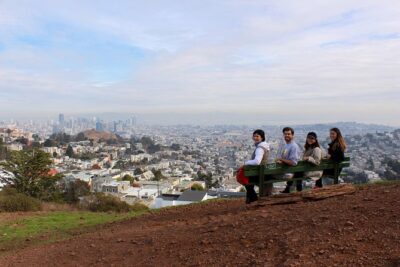
Liberty Hill also matters. You’ll be aware of the city’s topography fast—this is a walking tour in a town that builds upward. Expect some uphill effort, and expect that to come with payoffs: wider views and a stronger sense of what’s around you once you’re higher up.
Stop 2: Mission District Alleys, Murals, Buried Lagoon, and Victorian Streets
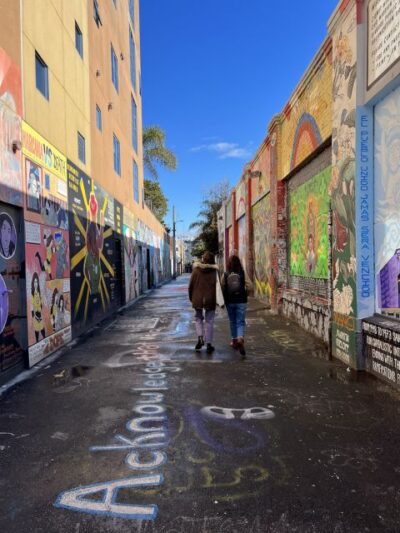
The second stop shifts to the Mission District, with time around the Alley of Murals, restaurants, Buried Lagoon, and Victorian architecture. This is where the tour becomes more visually “busy,” but in a good way—details stack up quickly when you know what you’re looking at.
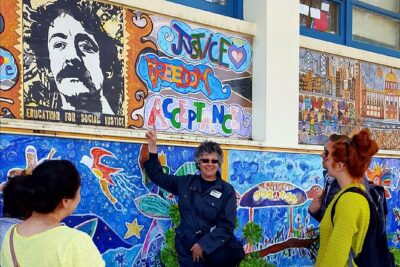
The Alley of Murals is a major reason to book. Street art changes block by block, and it often reflects local themes—community voices, time periods, and neighborhood humor or protest. With a guide, you don’t just admire the paintings. You understand what makes them part of the Mission’s identity.
Then you get a contrasting feel from the more architectural and residential side. Victorian architecture is a reminder that the Mission isn’t only about murals and dining. It’s also about homes, streets, and the physical layering of eras. Your guide’s job here is to point out the patterns so you can spot them even after the tour ends.
And yes, Buried Lagoon gets its moment. That’s the kind of place name that sounds like trivia until someone gives it context in plain language. It’s a good example of what this tour does well: it turns “what is that?” into “now I get it.”
More of the Castro and its history
Guide Style: Why This Walk Feels Like City Lore, Not a Lecture
The guide is a big part of the value here, and the name that comes up is Ryan. People describe his storytelling as animated and detailed, with humor and a love for the city that shows up in how he explains things.
You’ll likely notice a pattern in how the tour is guided:
- You look at a building, stairway, or streetscape detail
- You learn the neighborhood meaning behind it
- Then you move on with better context, so the next street makes sense faster
This matters because San Francisco can feel confusing if you only rely on your own interpretation. With the guide’s framing, you get your bearings fast—especially in neighborhoods where the mix of old and new can be hard to read from a single walk.
Also, the tour doesn’t shy away from the physical reality of the city. Expect you’ll climb hills and spend time moving between viewpoints. That’s not a drawback for everyone, but it’s part of the experience.
Price and What You Get for $65
At $65 per person, this tour sits in the “worth it if you want context” category. You’re not paying for museum entry or major paid attractions. Instead, you’re paying for structured access to neighborhood knowledge: the interpretation that helps you understand why the Castro and Mission feel the way they do.
Admission for the main stops is listed as ticket free, so your money mostly covers guiding, route time, and logistics. And because it’s a small group, your guide can actually keep a personal pace. That’s where value shows up. A big-bus-style tour might be cheaper, but it usually gives you less back-and-forth, fewer tailored explanations, and less time to ask what things mean.
One practical note: snacks are not included. That’s common on walking tours, but it still matters for value. If you’ll be out for 3–4 hours, plan a casual snack plan. If you want to buy food, the tour notes you can grab snacks at local favorites.
Timing, Pace, and How to Prepare for the Hills
The itinerary structure is straightforward: about 1.5 hours in the Castro, then about 1.5 hours in the Mission District. That timing works well because you’re not stuck in one neighborhood too long, and you can compare the feel of each area while it’s still fresh.
But walking in San Francisco has a cost: hills. The tour asks for moderate physical fitness, and the experience you’ll likely have includes plenty of uphill effort and stair-and-sidewalk movement. Bring the right shoes, and don’t treat this like a casual stroll.
If you tend to get tired on slopes, adjust your expectations. You’ll still see a lot, but your job is to pace yourself. Start steady. Take breaks when your guide pauses for key points. You’ll get more out of the stories when you’re not fighting fatigue.
Who This Tour Fits Best
This tour is ideal if you want to understand the city like a local rather than like a checklist.
You’ll probably enjoy it most if:
- you like neighborhood walking tours that explain culture and history in plain terms
- you want a guide who can connect multiple streets into one story
- you’re comfortable with moderate walking and hills
It’s also a solid choice for repeat visitors who feel like they’ve “done the basics” already. The Castro Theatre area and the Mission’s mural alley are famous, yes. But the value is in how the tour gives meaning to the details you’d otherwise miss.
If you’re traveling with someone who only wants iconic sights, this might be slightly more “street-level and interpretive” than what they expect. But if you like architecture, murals, and community storytelling, it’s a strong match.
Should You Book the San Francisco Castro Mission Loop Tour?
If you want a guided walk through the Castro and Mission with small-group energy and a guide who tells the stories behind what you see, I’d book it. The price makes sense when you factor in guided interpretation and the fact that admissions for the main stops are ticket-free.
Skip it only if hills and longer walking time are a dealbreaker for you. If your schedule is tight, this tour also eats a real chunk of your day—about 3 to 4 hours—so plan accordingly.
FAQ
How long is the San Francisco Castro Mission Loop Tour?
It runs about 3 to 4 hours total, with roughly 1 hour 30 minutes spent in the Castro and about 1 hour 30 minutes in the Mission District.
What does the tour cost?
The price is $65.00 per person.
Where does the tour start?
It starts at Castro Street & Market Street (Castro St & Market St, San Francisco, CA 94114) and ends back at the same meeting point.
Is the tour offered in English?
Yes, the tour is offered in English.
Are tickets included for the stops?
The listed admission for the main stops is free, so there’s no ticket cost shown for those parts of the tour.
Are snacks included?
No. Snacks aren’t included, but snacks can be purchased at local places nearby.
Is cancellation free?
Yes, you can cancel for a full refund up to 24 hours before the experience start time. Weather can also affect the schedule, and you’d be offered another date or a full refund if canceled for poor weather.
More Tour Reviews in San Francisco
- Muir Woods and Sausalito (Return by Bus or Ferry)★ 4.5 · 5,098 reviews
- Big Bus SF: Hop-on Hop-off Tour with 17 Stops and Sunset Option★ 4.0 · 4,539 reviews
- Napa and Sonoma Wine Country Full-Day Tour from San Francisco★ 4.5 · 4,455 reviews
- Small Group Yosemite and Giant Sequoias Day Trip from San Francisco★ 5.0 · 3,671 reviews
- San Francisco: Golden Gate Bay Cruise★ 4.7 · 3,644 reviews
- San Francisco: Hop-On Hop-Off Sightseeing Tour with 17 Stops★ 4.5 · 3,600 reviews
The Castro, Continued
- San Francisco LGBTQ Walking Tour with Local Guide★ 5.0 · 600 reviews
- San Francisco Urban Hike: Castro and Twin Peaks★ 5.0 · 71 reviews
- San Francisco: Castro District LGBTQ+ History Tour★ 5.0 · 9 reviews
- Castro District LGBTQ+ Historic Tour★ 5.0 · 9 reviews
- San Francisco : Mission and Castro districts tour in French★ 4.6 · 6 reviews
- Castro District LGBTQ+ History Tour★ 5.0 · 5 reviews
Murals and Tacos: The Mission
- Mission District Food Tour: Appetizers, Entrée and Dessert★ 5.0 · 182 reviews
- San Francisco: Mission District Food Tour with 6 Tastings★ 4.9 · 104 reviews
- Mission District Food Tour★ 5.0 · 69 reviews
- Mission District Food and Culture Walking Tour★ 4.5 · 47 reviews
- San Francisco: Mission District Walking Food Tour★ 4.8 · 22 reviews
- Mission 18th Street San Francisco Food Tour★ 4.5 · 15 reviews
Just Reviewed: Fresh San Francisco Tours
- Private San Francisco City Tour + Alcatraz (Tickets Incl., Max 6)
★ 5.0 · 3 reviews - San Francisco: North Beach Food and History Walking Tour
★ 5.0 · 3 reviews - San Francisco Bay Cruise and City Combo Tour
★ 3.5 · 3 reviews - San Francisco City Half-Day Private Custom Tour
★ 5.0 · 3 reviews - San Francisco: Muir Woods, Point Reyes, and Meadery Tour
★ 4.2 · 3 reviews - Private Muir Woods and Sausalito Half Day Tour
★ 5.0 · 3 reviews
Castro & LGBTQ+ Tours, compared.
 ★ 5.0San Francisco LGBTQ Walking Tour with Local GuideFrom $40600 reviews
 ★ 5.0San Francisco Urban Hike: Castro and Twin Peaks71 reviews
 ★ 5.0Castro District LGBTQ+ History TourFrom $399 reviews
 ★ 5.0Castro District LGBTQ+ Historic TourFrom $399 reviews
 ★ 4.6Mission and Castro districts tour in FrenchFrom $656 reviews
 ★ 5.0Castro District LGBTQ+ History TourFrom $395 reviews
 ★ 4.0Castro & LGBTQ Private Walking TourFrom $1004 reviews
 ★ 4.0Private City Kickstart Tour:The Castro & Mission DistrictFrom $1404 reviews
Browse the lists this tour appears in