
Reviewed · WALKING TOURS
San Francisco LGBTQ Walking Tour with Local Guide
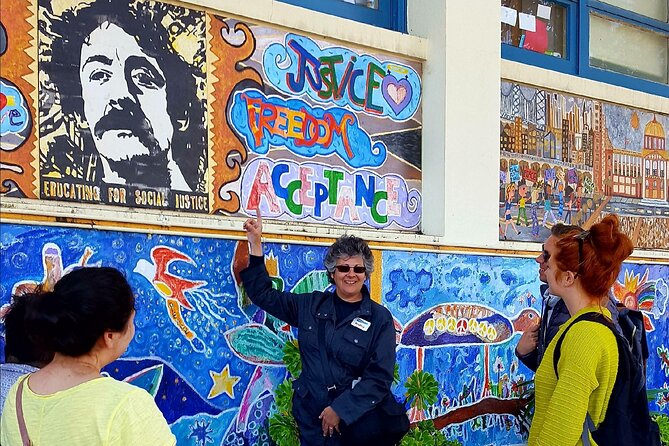
San Francisco’s Castro has a story you can walk. This 2-hour LGBTQ walking tour follows the neighborhood’s most important sites on foot, with a local guide connecting today’s activism to the people and events that shaped the area. You’ll cover major memorials and landmark locations tied to Harvey Milk and the AIDS crisis, plus present-day civil rights issues.
What I like most is the way the tour pairs names with places: you don’t just see landmarks, you learn what happened there and why it mattered. I also love that your guide is a long-time local community figure; Kathy in particular shows up in the feedback as funny, warm, and deeply tied to the Castro’s day-to-day life, which makes the whole walk feel personal instead of scripted.
One thing to consider: it runs on a rain-or-shine style schedule, but it still needs good weather to operate smoothly, and the experience is listed as non-refundable. If weather is uncertain, bring layers and plan to go in with that mindset.
In This Review
- Key highlights worth your time
- Entering the Castro at 400 Castro St
- The Castro Theater and the long chain of queer history
- Harvey Milk Plaza: the first openly gay politician, in context
- Inside the Human Rights Campaign Action Center and Store
- Pink Triangle, Rainbow Honor Walk, and the AIDS Quilt Names Project
- How the 2-hour walk fits real travel days
- Price and value: what $40 buys you here
- Who should book this Castro tour
- Before you go: small prep that helps
- Should you book it?
- FAQ
- How long is the San Francisco LGBTQ walking tour?
- What is the meeting point and where does the tour end?
- What time does the tour start?
- What is included in the ticket price?
- Is the tour in English?
- Does the tour run in bad weather?
- Is the tour wheelchair accessible?
- What is the cancellation and refund policy?
Key highlights worth your time
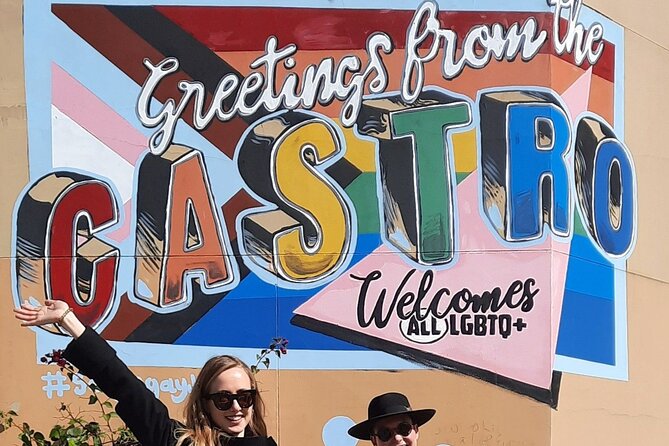
- Harvey Milk stops that go beyond photos: his home, his photo shop, and campaign headquarters are part of the walk
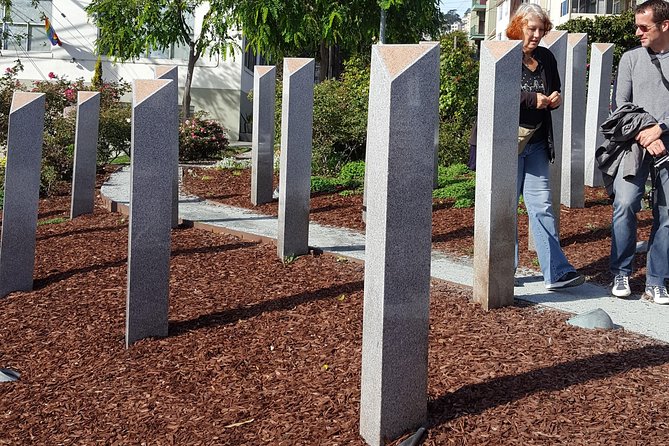
- Moving memorial sites on a single route: the Pink Triangle Memorial Park and the Rainbow Honor Walk are key anchors
- AIDS Quilt Names Project original site: you’ll see where the names were preserved and carried forward
- Human rights context at HRC Action Center: the tour connects past battles to employment, housing, and public accommodations
- Small group feel: the tour caps at a maximum of 2 travelers, so questions actually get answered
More of the Castro and its history
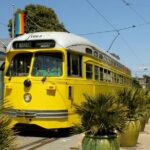
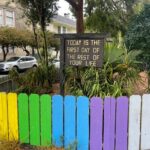
Entering the Castro at 400 Castro St
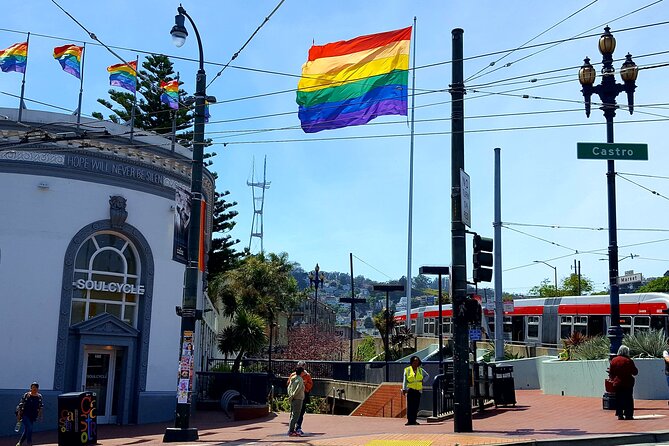
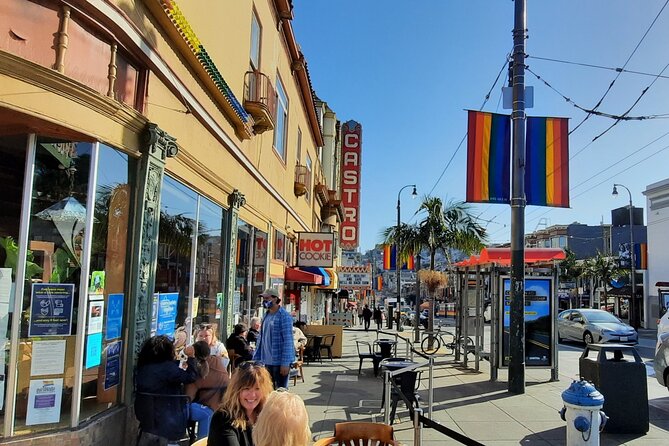
The tour starts at 400 Castro St and ends at the same spot, so you’re not constantly re-orienting or hunting for a final pickup point. The start time is 10:00 am, and you’ll get a mobile ticket, which is handy if you’re trying to keep your day light and paper-free.
One practical reason I’m a fan of this format: you’re near public transportation in a neighborhood where it’s easy to grab coffee or snacks before your walk. And because the group size is capped at 2 travelers, the pace can feel more like a conversation than a class. If you like asking follow-up questions, this setup makes it easier to do that without slowing down a big crowd.
Language is listed as English, and public walkways are noted as wheelchair accessible. That matters in the Castro, because a “short walk” can still mean uneven sidewalks, hills, and curb cuts depending on where you turn. Here, the route is designed around accessible public sidewalks, which helps you plan confidently.
The Castro Theater and the long chain of queer history
Stop 1 is where the tour really sets the frame: the Castro neighborhood itself, plus a string of landmarks that tie local identity to national LGBTQ rights battles. You’ll visit the historic Castro Theatre, known for its Spanish Colonial Baroque architecture. Even if you’ve walked past that building before, it lands differently when you understand what the Castro became and how its public face developed over time.
You’ll also learn how the district got its name, which sounds small until you realize how much place-naming shapes community storytelling. After that, the tour builds momentum around major figures and events.
A big draw is the amount of content packed into the 2 hours. The tour covers 20+ historical sites spanning major eras, including the Gold Rush and World War II, then moving into civil rights, Harvey Milk, and the AIDS epidemic. That breadth is useful for first-timers because it stops the conversation from feeling stuck in one chapter of history.
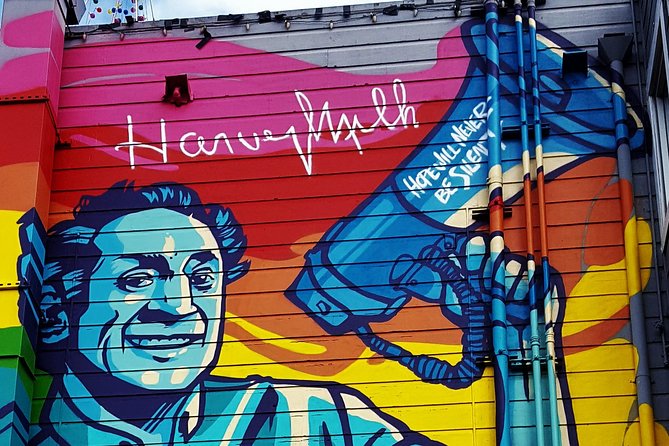
Harvey Milk-themed stops are a highlight of this part of the route. You’ll see places tied to his life and activism, including his home, his photo shop, and the campaign headquarters where his political work took shape. This is one of those tours where you start to notice the Castro in a new way: a sidewalk corner becomes a reference point, and a storefront becomes a timeline.
And then the memorial side kicks in. You’ll reach the Pink Triangle Memorial Park and the Rainbow Honor Walk Project, plus the AIDS Quilt Names Project original site. These stops don’t feel like quick photo moments. They’re presented as part of the neighborhood’s ongoing memory work, tied to the real human cost of the AIDS era and the organizing that followed.
Harvey Milk Plaza: the first openly gay politician, in context
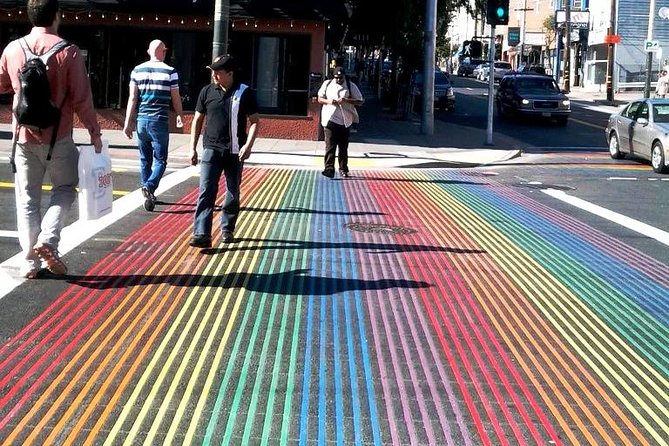
Stop 2 takes you to Harvey Milk Plaza for about 20 minutes. This is a focused stop, and it’s where the tour often feels most directly empowering, because you learn Milk’s political impact in plain language.
You’ll hear how Harvey Milk arrived and became the first openly gay male politician to serve public office in the United States, along with how he worked as a civil rights activist. If you’ve only encountered Milk through headlines or a monument, this stop helps connect his courage to strategy and community organizing.
One detail I found especially interesting in how it’s framed here: you’ll also learn about how the rainbow flag was created. Even if you already know the general story, it helps to hear it in the context of the Castro’s public symbols—because that’s where advocacy becomes visible. Flags, posters, plaques, and memorial artwork are part of how communities communicate when mainstream systems refuse them.
This stop is also a good pause point mid-tour. After moving through multiple sites, you get breathing room to absorb what you just learned, ask questions, and reset your energy for the next location.
Inside the Human Rights Campaign Action Center and Store
Stop 3 is shorter—around 10 minutes—but it changes the tone in a smart way. You’ll visit Harvey Milk’s original camera shop, which is now the Human Rights Campaign Action Center and Store. That “then and now” detail matters because it turns the site from a museum object into a living institution.
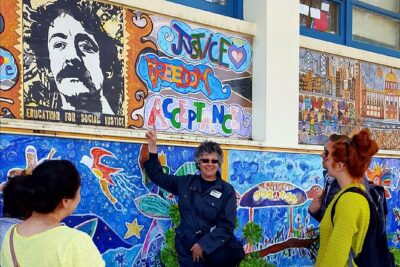
At this stop, the guide talks about the fact that LGBTQ people still don’t have equal rights in areas like employment, housing, and public accommodations. That’s the kind of real-world link that keeps the tour from becoming only nostalgia. You’re not just learning about what happened; you’re being reminded that policy and civil rights are ongoing work.
It also gives you something useful if you’re traveling for the first time and want to do more than check boxes. You’ll leave with clearer questions you can ask later—like what equality looks like in everyday life, and how communities push for it.
The city at walking pace, more routes
Pink Triangle, Rainbow Honor Walk, and the AIDS Quilt Names Project
Several stops in this tour revolve around memory and recognition, and that’s where the walking format shines. When you move slowly from site to site, these aren’t abstract concepts. They become physical places you can stand with.
The Pink Triangle Memorial Park is one of the most important sites on the route. It’s tied to the symbolism that later became part of LGBTQ resistance and remembrance. Seeing it in the Castro helps you understand why communities reclaim symbols of persecution and turn them into messages of survival.
The Rainbow Honor Walk Project is about honoring people who helped shape LGBTQ equality. When you encounter it during the walk, it feels like a bridge between the Castro’s local story and a broader national movement.
And then there’s the AIDS Quilt Names Project original site. This stop hits hard, in a grounded way. It’s not only about the AIDS epidemic as a historical event; it’s about names, families, and the way communities ensure people are never erased. The tour’s pacing gives you time to absorb that weight without rushing you out the door.
One of the reasons these stops earn such strong reactions is that the guide ties each site to the bigger theme: activism, remembrance, and continuing civil rights battles. You leave with a sense of why the Castro became an epicenter for organizing and visibility—and why the work didn’t end when the headlines changed.
How the 2-hour walk fits real travel days
This tour lasts about 2 hours. With short stop durations spread across the route, it tends to work well even if you’re not used to long walks. It’s still a walking tour, so wear comfortable shoes and dress for fog or sun swings, which San Francisco can do without warning.
The tour operates rain or shine, with a note that it requires good weather. If you’re visiting during a wetter stretch, it’s smart to pack layers and plan for flexibility. If the experience gets canceled due to poor weather, you should expect a different date or a full refund, depending on what’s offered.
Wheelchair accessibility is noted for public walkways, which is a genuine planning advantage. If mobility is a concern, you’ll still want to check your own comfort with sidewalk conditions in the Castro, but the route is described as suitable for wheelchair access.
Also, service animals are allowed, and the tour is listed as suitable for “most travelers.” If you’re coming with a parent, teen, or anyone who likes history but doesn’t want a museum day, this tends to fit that sweet spot.
Price and value: what $40 buys you here
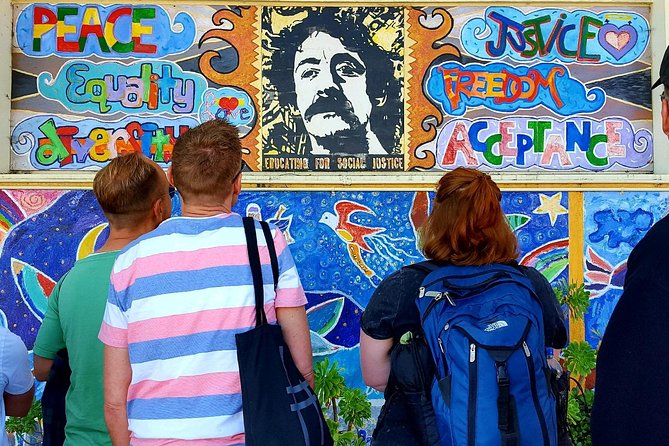
At $40 per person, this tour prices in the mid-range for a guided walk in San Francisco, but the value comes from how much is packed into the route and how it’s taught. You’re paying for a local guide who connects multiple kinds of landmarks: architecture, politics, memorials, and current civil rights issues.
What makes the price feel more reasonable is the mix of included access points. Several stops have admission ticket included, while the Human Rights Campaign Action Center and Store stop is listed as admission free. In other words, you’re not just walking past things from the sidewalk—you’re using guided context at sites connected to the story.
The small group cap at 2 travelers also affects value. If you’ve ever taken a tour where you can barely ask questions, you’ll likely notice the difference here. A tighter group means the guide can respond to what you care about, whether that’s Harvey Milk, the AIDS memorial sites, or how symbols like the rainbow flag became part of the public language of pride.
Finally, the timing matters. The tour is commonly booked about 29 days in advance, so if you have a tight itinerary, it’s worth booking sooner rather than gambling on last-minute availability.
Who should book this Castro tour

You’ll get the most out of this tour if you want LGBTQ history tied directly to the places you can actually visit in the Castro. It’s especially good for:
- First-time San Francisco visitors who want a focused, story-driven route in the Castro
- People interested in Harvey Milk who want more than a quick monument stop
- Travelers who care about how AIDS-era memory is honored and carried forward
- Couples, families, or anyone who prefers a smaller group experience with time to ask questions
If you already know every detail of LGBTQ activism in San Francisco, you may still enjoy the way the guide connects the sites into a single walkable narrative. And if you’re newer to the topic, the structure helps you build a clear timeline without feeling overwhelmed.
Before you go: small prep that helps
Since this tour runs in rain or shine, plan like it’s a real outdoor walk. Bring layers, expect street-level conditions, and keep water handy. You’ll be out near major Castro landmarks, so it’s easy to continue your day afterward with nearby meals.
Because the experience is non-refundable and can be canceled due to minimum numbers, it’s smart to book only when you’re confident you can make the date. The upside is that you also get straightforward entry via your mobile ticket and a clear start point at 400 Castro St.
If you’re visiting during a busy week or weekend, booking ahead is wise given the way the tour is scheduled in advance.
Should you book it?
If you want a guided walk that treats the Castro like more than a postcard, I’d book this. It gives you a tight two-hour route through major memorials and activism sites, with context that makes the neighborhood easier to understand and harder to forget.
The best part is the blend: architecture and street-level history, political courage, memorial spaces, and today’s civil rights reality, all in one loop. With a small group and a guide who brings real local connection, it’s one of those tours that makes you feel like you gained a map in your head, not just photos on your phone.
FAQ
How long is the San Francisco LGBTQ walking tour?
It runs for about 2 hours.
What is the meeting point and where does the tour end?
The tour starts and ends at 400 Castro St, San Francisco, CA 94114.
What time does the tour start?
The listed start time is 10:00 am.
What is included in the ticket price?
A local guide is included. Some stops include admission tickets, while the Human Rights Campaign Action Center and Store stop is listed as free.
Is the tour in English?
Yes, it is offered in English.
Does the tour run in bad weather?
The tour is described as operating rain or shine, but it also requires good weather. If it’s canceled due to poor weather, you’ll be offered a different date or a full refund.
Is the tour wheelchair accessible?
Public walkways are listed as wheelchair accessible.
What is the cancellation and refund policy?
This experience is non-refundable and cannot be changed for any reason. If it’s canceled because of poor weather or minimum passenger requirements, you’ll be offered an alternative or full refund.
More Tours in San Francisco
- Big Bus SF: Hop-on Hop-off Tour with 17 Stops and Sunset Option★ 4.0 · 4,539 reviews
- Napa and Sonoma Wine Country Full-Day Tour from San Francisco★ 4.5 · 4,455 reviews
- San Francisco: Hop-On Hop-Off Sightseeing Tour with 17 Stops★ 4.5 · 3,600 reviews
- Yosemite Highlights & Giant Sequoias Day Tour from San Francisco★ 4.5 · 3,455 reviews
- San Francisco Love Tour★ 5.0 · 2,830 reviews
- San Francisco: Alcatraz Island & 48-Hour Hop-On Hop-Off Tour★ 4.6 · 2,245 reviews
More Tour Reviews in San Francisco
- Muir Woods and Sausalito (Return by Bus or Ferry)★ 4.5 · 5,098 reviews
- Big Bus SF: Hop-on Hop-off Tour with 17 Stops and Sunset Option★ 4.0 · 4,539 reviews
- Napa and Sonoma Wine Country Full-Day Tour from San Francisco★ 4.5 · 4,455 reviews
- Small Group Yosemite and Giant Sequoias Day Trip from San Francisco★ 5.0 · 3,671 reviews
- San Francisco: Golden Gate Bay Cruise★ 4.7 · 3,644 reviews
- San Francisco: Hop-On Hop-Off Sightseeing Tour with 17 Stops★ 4.5 · 3,600 reviews
The Castro, Continued
- San Francisco Urban Hike: Castro and Twin Peaks★ 5.0 · 71 reviews
- San Francisco Castro Mission Loop Tour★ 5.0 · 12 reviews
- San Francisco: Castro District LGBTQ+ History Tour★ 5.0 · 9 reviews
- Castro District LGBTQ+ Historic Tour★ 5.0 · 9 reviews
- San Francisco : Mission and Castro districts tour in French★ 4.6 · 6 reviews
- Castro District LGBTQ+ History Tour★ 5.0 · 5 reviews
Just Reviewed: Fresh San Francisco Tours
- Private San Francisco City Tour + Alcatraz (Tickets Incl., Max 6)
★ 5.0 · 3 reviews - San Francisco: North Beach Food and History Walking Tour
★ 5.0 · 3 reviews - San Francisco Bay Cruise and City Combo Tour
★ 3.5 · 3 reviews - San Francisco City Half-Day Private Custom Tour
★ 5.0 · 3 reviews - San Francisco: Muir Woods, Point Reyes, and Meadery Tour
★ 4.2 · 3 reviews - Private Muir Woods and Sausalito Half Day Tour
★ 5.0 · 3 reviews
Walking Tours, compared.
 ★ 5.0North Beach & Little Italy Walking Tour: Food, History & FlavorFrom $861,044 reviews
 ★ 5.0San Francisco Chinatown Walking TourFrom $59778 reviews
 ★ 5.0Chinatown Walking Tour: Food, History & FlavorFrom $86575 reviews
 ★ 5.0#1 Sonoma Walking Food, Wine Tasting & History Tour (Public Tour)From $189457 reviews
 ★ 4.8Chinatown Culinary Walking TourFrom $84265 reviews
 ★ 5.0San Francisco Ghost Hunt Walking TourFrom $25177 reviews
 ★ 5.0Private Walking Tour of San FranciscoFrom $49150 reviews
 ★ 4.8Food Walking Tour of Chinatown & North BeachFrom $94148 reviews
Browse the lists this tour appears in