
Reviewed · HISTORICAL TOURS
Castro District LGBTQ+ History Tour
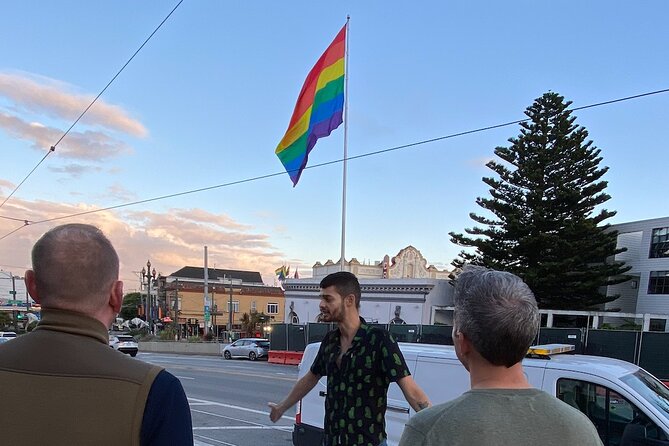
Rainbow flags and real activism in 90 minutes. In the Castro, this guided walk points out the original rainbow flag and a section of the HIV/AIDS Memorial Quilt, then ties them to people and places that shaped San Francisco LGBTQ life.
I love that the tour stays human-scale, max 30, so questions actually get answered. Guides like Miguel and Eric keep a steady storytelling pace, sharing how each corner connects without turning it into a lecture.
At $39 and 1 hour 30 minutes, it’s a fast sampler of a huge topic, mostly spent walking and standing on city sidewalks, so you may want comfy shoes and a plan for weather. Quick stops mean you won’t pause long at every detail.
In This Review
- Key highlights at a glance
- Entering the Castro’s LGBTQ story in 90 minutes
- Starting at Harvey Milk Plaza (and why it matters)
- The stop with the original rainbow flag and the AIDS Memorial Quilt
- Gay bars, window rules, and everyday visibility
- The first store to hire openly gay workers
- 1920s palatial theater: culture with architectural weight
- Guide style is a big part of the value
- Price and logistics: $39 is the practical way to do this
- Making the most of the walk: what to do before you arrive
- After you finish at 18th Street & Castro
- Should you book this Castro LGBTQ+ History Tour?
- FAQ
- How long is the Castro District LGBTQ+ History Tour?
- Where does the tour start and end?
- What time does the tour run?
- Is there a cost for the Harvey Milk Plaza stop?
- What language is the tour offered in?
- Do I get a mobile ticket?
- Are service animals allowed?
- Can I get a full refund if I cancel?
Key highlights at a glance
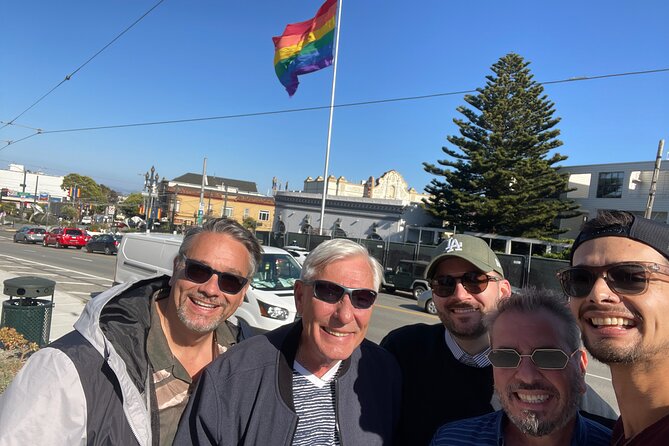
- Original rainbow flag + AIDS Quilt piece: You see visual artifacts tied to survival, pride, and remembrance.
- Harvey Milk Plaza context: You learn why this spot mattered for community life and later conflict.
- Jose Sarria personal items: The stop brings activism down to real objects, not just dates.
- Long-running gay bar story: A detail about window coverage shows how safety and visibility changed over time.
- Employment rights in everyday places: The “first store to hire openly gay workers” angle turns politics into real-world impact.
- 1920s palatial theater exterior: You get a cultural backdrop for how the Castro hosted community energy.
More of the Castro and its history
Entering the Castro’s LGBTQ story in 90 minutes
The Castro District is famous for a reason, but its reputation can flatten the details. This tour is built to keep the story grounded: specific landmarks, specific people, and enough context to understand why these places still matter.
You’re paying for a guide who can connect dots quickly and clearly. In this case, the format is short enough to fit into an afternoon, but focused enough to leave you with a mental map of LGBTQ milestones across the neighborhood.
Starting at Harvey Milk Plaza (and why it matters)
The tour kicks off at Harvey Milk Plaza. This is not just a photo stop. It’s described as a gathering place of the gay community that resulted in the White Night Riots, so you get the sense that Castro life wasn’t happening in isolation. It was in the middle of citywide tension.
There’s also a practical reason to start here: it’s an easy anchor point in the neighborhood, so you can later re-find your bearings after the walk. The tour includes a timed window at the plaza (about 10 minutes), and that specific stop is listed as free.
If you like walking tours that give you a quick cause-and-effect timeline, this opening works well. If you want a slower, deeper history lecture, the plaza’s brief stop might feel like a teaser.
The stop with the original rainbow flag and the AIDS Memorial Quilt
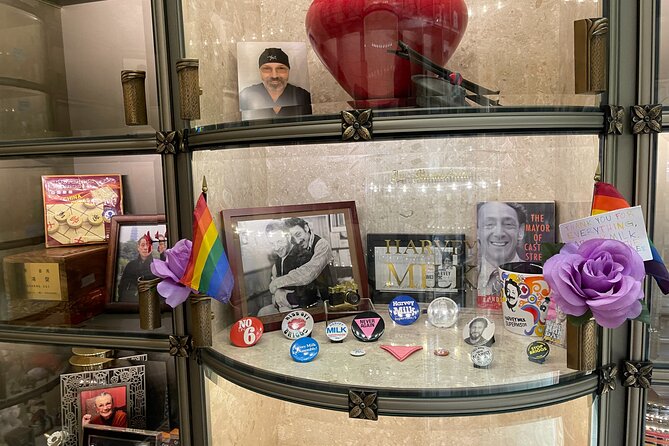
One of the most powerful moments is the stop tied to the original rainbow flag. Instead of treating the flag as a symbol that appeared out of nowhere, you’re shown how it’s rooted in a moment of identity and visibility.
You also encounter a piece of the HIV/AIDS Memorial Quilt at the same stop. That matters because it shifts the tone from pride-as-brand into pride-as-protection and remembrance. In a neighborhood shaped by joy, this is the stop that reminds you what was fought for, and what was lost.
Another highlight at the same place: Jose Sarria’s personal items. This is where the story starts to feel personal. Sarria isn’t presented as a distant legend; the emphasis is on tangible artifacts, which helps you remember that movements are built by individuals who took risks and made choices.
Drawback to consider: because this is part of a 1 hour 30 minute walk, you won’t get long, slow reflection time at each object. Still, it’s the kind of stop that you’ll likely want to look at twice—once while listening, and again after.
Gay bars, window rules, and everyday visibility
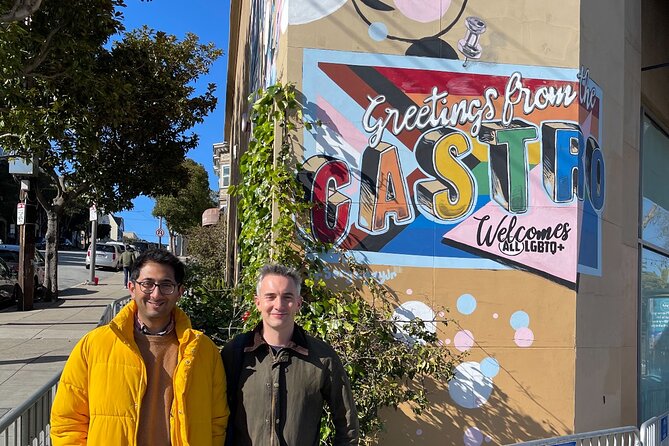
Castro history isn’t only about major headlines. It’s also about what it took to be seen safely, day after day.
This tour includes an iconic gay bar that has been in business for over 50 years. A very specific detail is the window policy: when the bar originally opened, it did not block out their windows even though that was customary for gay bars. That single choice is a window into a cultural shift—from hiding to claiming space.
There’s real value in hearing this kind of detail. It helps you understand that visibility was not just a feeling; it was architecture, business decisions, and community risk.
If you’re the type of traveler who likes to learn how social change shows up in normal places—restaurants, storefronts, the look of a block—this is one of the sections you’ll think about later.
The older layers of San Francisco, peeled back
The first store to hire openly gay workers
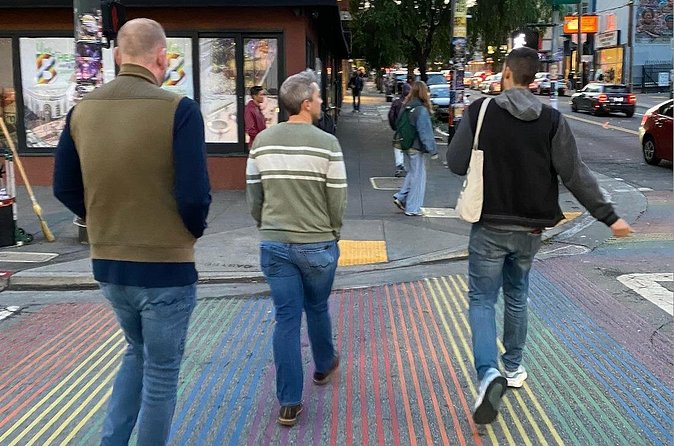
Next comes a stop focused on employment and public acceptance: the first store in San Francisco to hire openly gay workers. That’s an important angle because it connects LGBTQ rights to economic life, not just laws or protests.
It also gives you a practical lens for interpreting the Castro. This neighborhood is often explained through entertainment and nightlife, but a big part of what sustained it was inclusion across the workday.
In terms of pacing, this stop is likely to feel like a story that connects back to earlier themes: visibility, community power, and the moment when being openly gay stopped being an unofficial taboo.
1920s palatial theater: culture with architectural weight
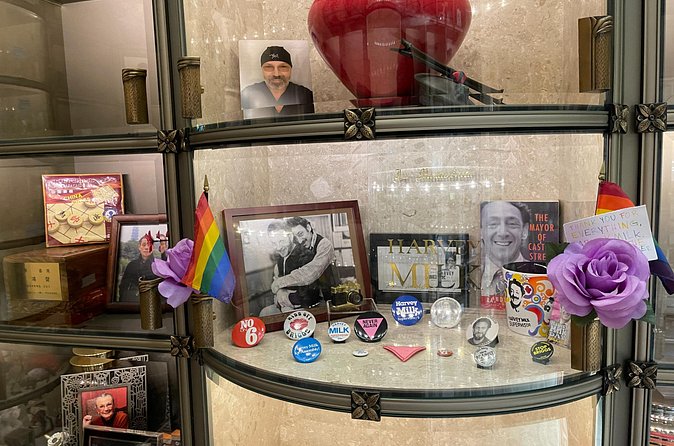
The tour also includes one of the last palatial-style theaters from the 1920s. Even if you’re not a theater person, this stop adds useful context: community life doesn’t happen in a vacuum. It happens in buildings designed for gathering, performance, and shared attention.
I like that the tour doesn’t treat architecture as background scenery. When you learn what’s there and why it mattered historically, it changes how you see the street.
A small consideration: if you’re hoping for deep interior details, this stop is described as a theater sight, but the data doesn’t say there’s an indoor visit. Plan on learning from what you can see around the exterior and nearby area.
Guide style is a big part of the value
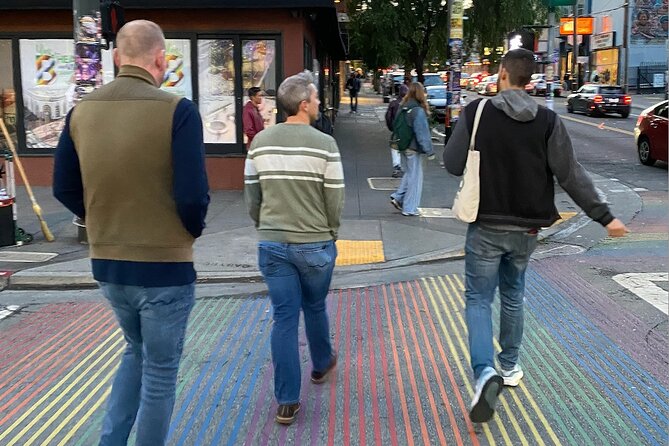
This is where the tour earns its strong reviews. Guides like Miguel and Eric are singled out for holding a smooth pace and answering questions clearly. The overall impression is that you can stay present without obsessing over the clock.
That’s a real benefit on a compact tour. A 1 hour 30 minute walking route needs rhythm. If the guide rushes, you miss meaning. If the guide drags, you lose attention. Here, the aim is steady pacing with room for Q&A.
Also note the group size limit: up to 30 travelers. That’s not tiny, but it’s small enough that the guide can manage the flow and keep the walk feeling like a group rather than a crowd.
English is the offered language, and the vibe is described as history with culture—so it should work well even if you’re not an expert going in.
Price and logistics: $39 is the practical way to do this
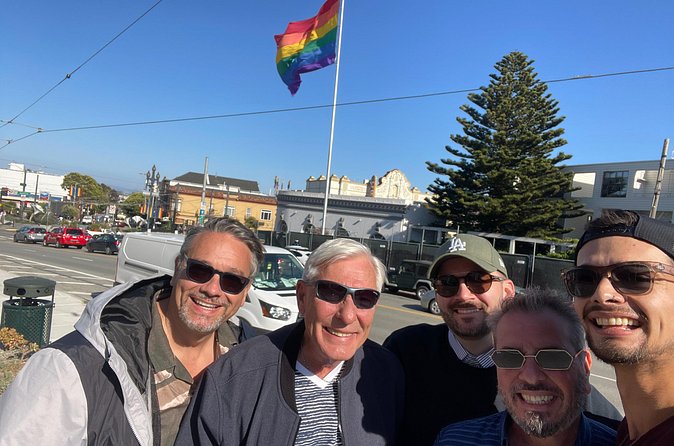
At $39 per person for about 1 hour 30 minutes, the big question is: what are you buying?
You’re buying a guided route through several meaningful stops—some anchored to artifacts and memorial culture, others to community gathering and long-running institutions. You’re also buying interpretation. In San Francisco, it’s easy to walk past plaques and store signs without understanding why they matter.
This tour also includes at least one free element at the start point area (Harvey Milk Plaza is listed with free admission). So your money goes into the guide and the walking connections, not into a chain of paid museum tickets.
Timing-wise, it runs at 3:00 pm, and it’s commonly booked about a week ahead. If you’re traveling in peak seasons, don’t treat it as a last-minute maybe. A popular LGBTQ-focused tour can fill quickly.
Logistics basics that matter:
- You’ll get a mobile ticket.
- It’s near public transportation.
- Service animals are allowed.
- It’s built for most travelers (no special gear described).
Making the most of the walk: what to do before you arrive
Because the tour is mostly walking and involves standing outside at multiple stops, I recommend you plan for comfort. Wear shoes you’d wear for a city afternoon. If you’re sensitive to weather, bring a layer—San Francisco can shift fast.
Also, if you want better answers from your guide, come with at least one question you genuinely care about. Examples that work well with this kind of route:
- How did visibility change in the Castro over time?
- What role did businesses and public spaces play?
- Why were specific symbols and memorials important?
With this tour’s short format, the guide’s ability to answer questions concisely is part of the experience. If you ask a clear question, you’ll likely get a clear response.
After you finish at 18th Street & Castro
The tour ends at 18th Street & Castro Street. That’s a useful finish line because you’re dropped back right in the center of the neighborhood’s action.
After the walk, you can use what you just learned to look at the street differently. When you notice a business that feels like it’s been there forever, or you see a sign that reflects community life, you’ll have context for why that continuity matters.
If you’re pairing this with other Castro time, this ending point is convenient: you can keep exploring on your own at that same neighborhood pace instead of crisscrossing the city right after a tour.
Should you book this Castro LGBTQ+ History Tour?
I’d book it if you want a tight, meaningful LGBTQ history route in the Castro that’s built around real places and real artifacts. The strongest reasons are simple: you get the rainbow flag, a piece of the AIDS Memorial Quilt, and Jose Sarria’s personal items, and you hear the story explained with a pace that keeps you engaged.
I would not book it if you need a long, slow, museum-style deep dive. This is short by design. You’ll leave with a solid map of key landmarks, but you won’t walk away with every nuance of every era.
One more practical note: since it’s commonly booked about a week ahead, booking sooner rather than later is the easiest way to protect your schedule.
FAQ
How long is the Castro District LGBTQ+ History Tour?
The tour lasts about 1 hour 30 minutes.
Where does the tour start and end?
It starts at Harvey Milk Plaza, San Francisco, CA 94114, and ends at 18th Street & Castro Street, San Francisco, CA 94114.
What time does the tour run?
The listed start time is 3:00 pm.
Is there a cost for the Harvey Milk Plaza stop?
Harvey Milk Plaza is listed as a stop with free admission.
What language is the tour offered in?
The tour is offered in English.
Do I get a mobile ticket?
Yes, the tour includes a mobile ticket.
Are service animals allowed?
Yes, service animals are allowed.
Can I get a full refund if I cancel?
Yes. You can cancel up to 24 hours in advance for a full refund. If you cancel less than 24 hours before the experience starts, the amount you paid will not be refunded.
More Tours in San Francisco
- Big Bus SF: Hop-on Hop-off Tour with 17 Stops and Sunset Option★ 4.0 · 4,539 reviews
- Napa and Sonoma Wine Country Full-Day Tour from San Francisco★ 4.5 · 4,455 reviews
- San Francisco: Hop-On Hop-Off Sightseeing Tour with 17 Stops★ 4.5 · 3,600 reviews
- Yosemite Highlights & Giant Sequoias Day Tour from San Francisco★ 4.5 · 3,455 reviews
- San Francisco Love Tour★ 5.0 · 2,830 reviews
- San Francisco: Alcatraz Island & 48-Hour Hop-On Hop-Off Tour★ 4.6 · 2,245 reviews
More Tour Reviews in San Francisco
- Muir Woods and Sausalito (Return by Bus or Ferry)★ 4.5 · 5,098 reviews
- Big Bus SF: Hop-on Hop-off Tour with 17 Stops and Sunset Option★ 4.0 · 4,539 reviews
- Napa and Sonoma Wine Country Full-Day Tour from San Francisco★ 4.5 · 4,455 reviews
- Small Group Yosemite and Giant Sequoias Day Trip from San Francisco★ 5.0 · 3,671 reviews
- San Francisco: Golden Gate Bay Cruise★ 4.7 · 3,644 reviews
- San Francisco: Hop-On Hop-Off Sightseeing Tour with 17 Stops★ 4.5 · 3,600 reviews
The Castro, Continued
- San Francisco LGBTQ Walking Tour with Local Guide★ 5.0 · 600 reviews
- San Francisco Urban Hike: Castro and Twin Peaks★ 5.0 · 71 reviews
- San Francisco Castro Mission Loop Tour★ 5.0 · 12 reviews
- San Francisco: Castro District LGBTQ+ History Tour★ 5.0 · 9 reviews
- Castro District LGBTQ+ Historic Tour★ 5.0 · 9 reviews
- San Francisco : Mission and Castro districts tour in French★ 4.6 · 6 reviews
Just Reviewed: Fresh San Francisco Tours
- Private San Francisco City Tour + Alcatraz (Tickets Incl., Max 6)
★ 5.0 · 3 reviews - San Francisco: North Beach Food and History Walking Tour
★ 5.0 · 3 reviews - San Francisco Bay Cruise and City Combo Tour
★ 3.5 · 3 reviews - San Francisco City Half-Day Private Custom Tour
★ 5.0 · 3 reviews - San Francisco: Muir Woods, Point Reyes, and Meadery Tour
★ 4.2 · 3 reviews - Private Muir Woods and Sausalito Half Day Tour
★ 5.0 · 3 reviews
Historical Tours, compared.
 ★ 5.0Chinatown & North BeachLittle Italy: 7 Tastings & HistoryFrom $961,070 reviews
 ★ 5.0North Beach & Little Italy Walking Tour: Food, History & FlavorFrom $861,044 reviews
 ★ 5.0Chinatown Walking Tour: Food, History & FlavorFrom $86575 reviews
 ★ 5.0#1 Sonoma Walking Food, Wine Tasting & History Tour (Public Tour)From $189457 reviews
 ★ 5.0San Francisco Whiskey Cocktail Class: Views and City HistoryFrom $69206 reviews
 ★ 4.5Chinatown Food & History Walking Tour – Small GroupFrom $8536 reviews
 ★ 4.9Chinatown Food and History Walking TourFrom $8527 reviews
 ★ 4.5North Beach Food & History Walking Tour – Small GroupFrom $8925 reviews
Browse the lists this tour appears in